Uluru and the Top End

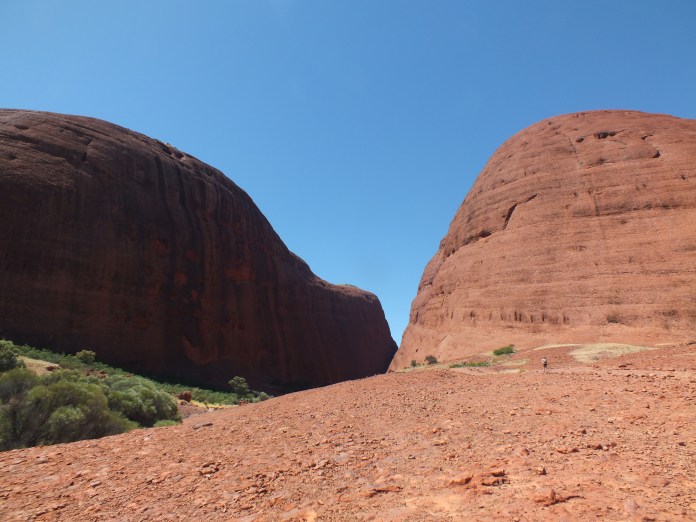
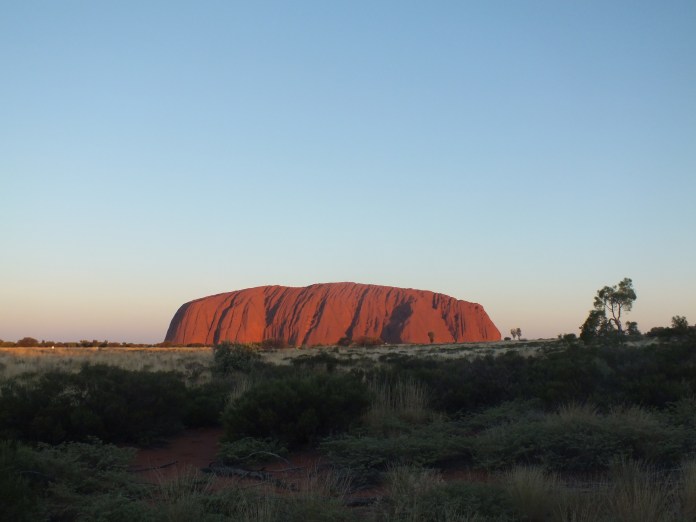
It was my last week in Australia. I’d been persuaded to see Uluru – not the magic glowing rock it’s sometimes made out to be, but a majestic and powerful creature of the earth – and began my journey north. From the bus I watched the landscape grow green and lush. Along the roadside were termite mounds ranging from tennis ball bumps to full-size snowmen creatures dressed in old t-shirts. Dark grey clouds appeared and glowered until late afternoon when it poured torrentially for five minutes, and I realised I hadn’t seen rain in over a month.

Stepping off in Darwin I was hit by the humidity: it was a physical resistance, like swimming through the air. In the hostel my air conditioning was mistakenly set to 26 degrees (which felt freezing) and I woke to find the floor and walls covered in a sticky layer of condensation. But now it’s only the end of the wet season – I can’t imagine what it’s like at Christmas.
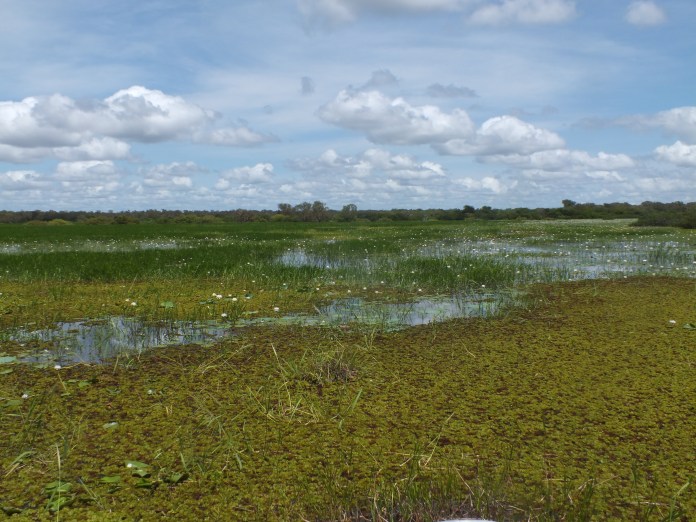
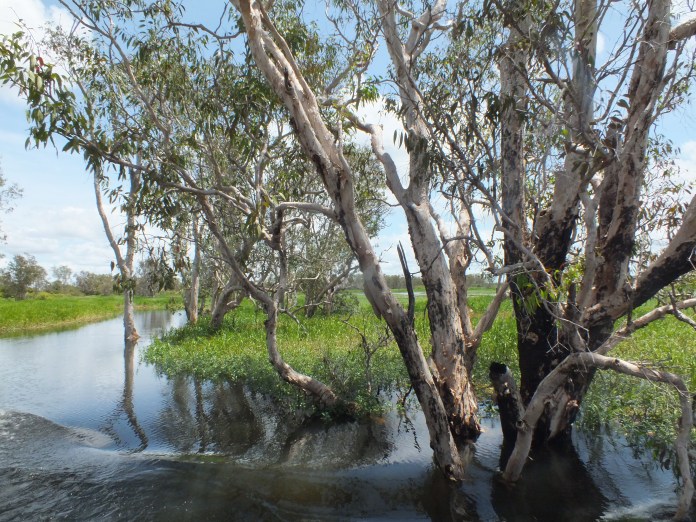
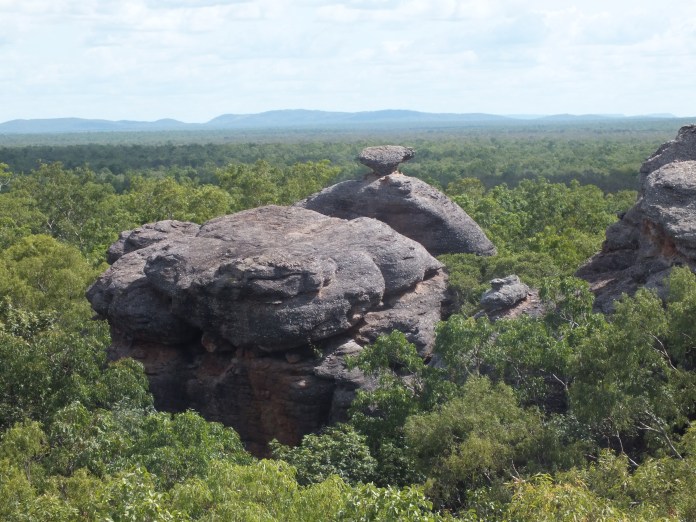
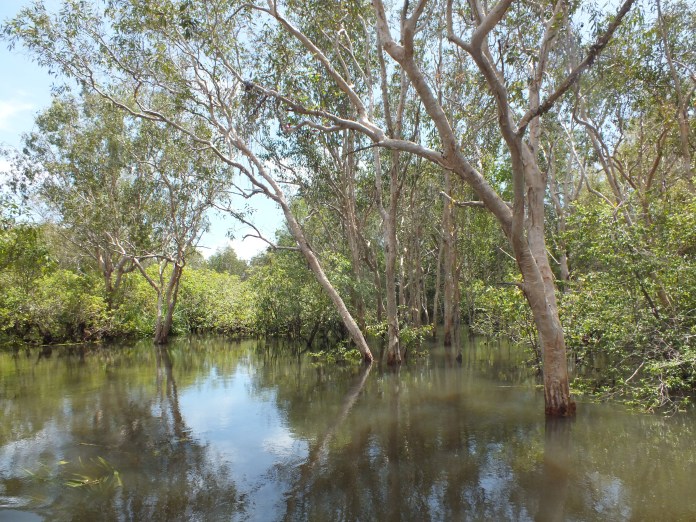
Since it’s the wet season it was harder to visit Kakadu, the massive national park in the top end of Australia. In fact, it was mostly underwater. I took a river cruise through parts that are dry land for the rest of the year. ‘Try to imagine my aunty standing underneath that tree fishing’, our guide said, pointing to a small bush – the few branches of the tree that still remained above water.

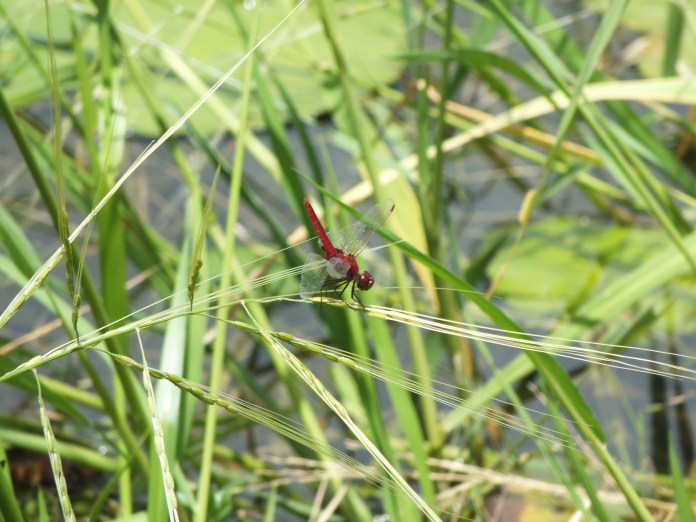
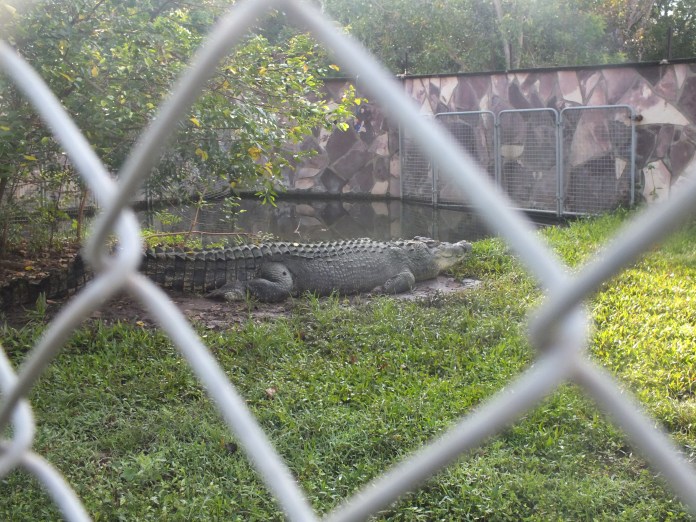
The water is beautifully tranquil, but murky and lethal. Before we set off in the boat we were given the compulsory lifebelt safety talk, but it ended with the instruction to never even think about using one since there are about 10,000 salties just waiting to eat you. It was very reassuring. The words of our guide kept on going through my head: ‘Remember, you’re no longer top of the food chain’. In the end, though, the closest I ever came to seeing a crocodile was the one caged in a roadside inn we passed, and the skull of the second largest croc in the world (the largest skull is in – where else – Russia). Instead we saw lilies, electric blue kingfishers, plump magpie geese, and lots and lots of still water.
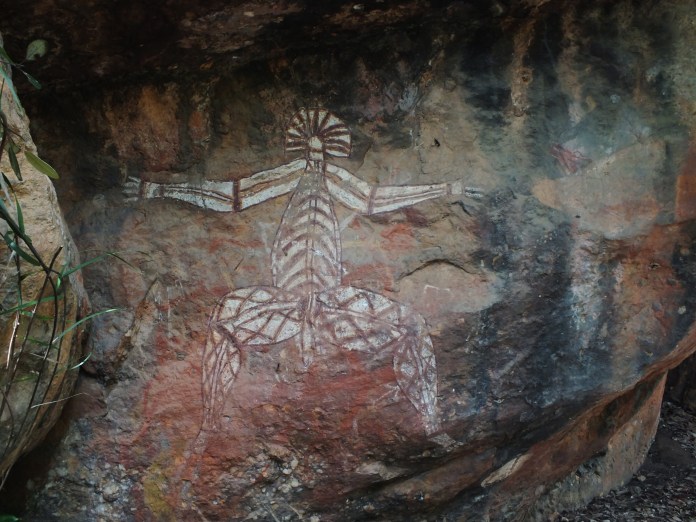
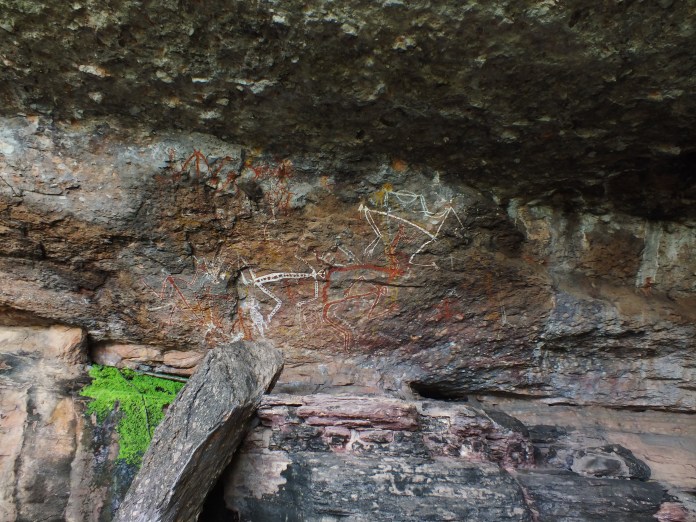
Kakadu is also home to some of the oldest rock art in the world. We saw a monster, painted in x-ray decorative style, who bashed women to death with a yam, a painting intended as a warning for women to stay near the camp. I thought the most interesting drawings were a series of very basic stick figures with balls for joints. They are a warning that this is sickness country and that if you stay your joints will swell up. Thousands of years later it was discovered that Kakadu sits on one of the world’s largest mines of uranium and what people were experiencing was radiation poisoning from the water.
The small city of Darwin wasn’t quite as exciting as I hoped. I don’t know what I was expecting, maybe the old frontier town older generations talk about. It’s a quiet city, not unattractive, with a prominent WW2 history. The military presence is strong and Asia does feel very close – closer than Sydney or Melbourne. It did feel quite different from other places, with its massive bats, fragrant air, beautiful but untouchable water and spectacular sunsets.

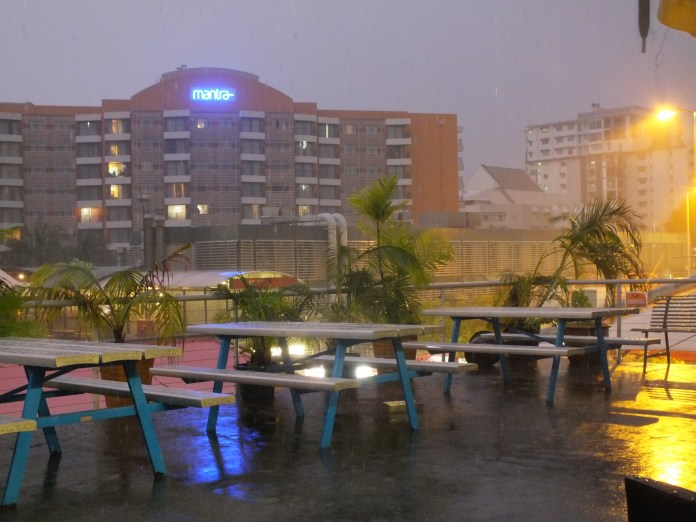
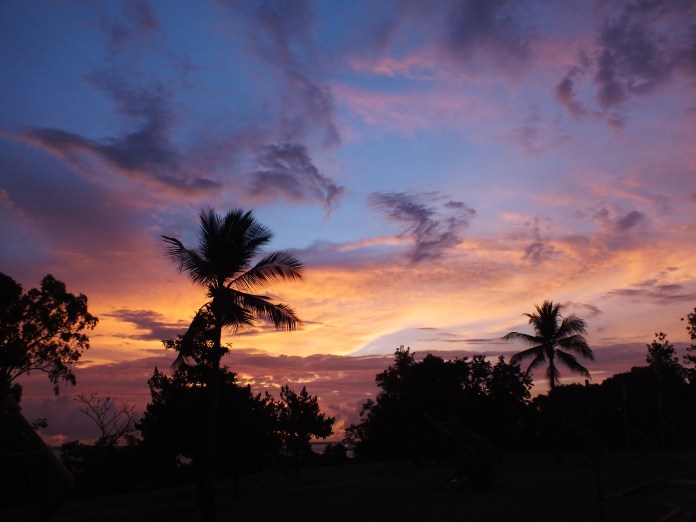
It was a good place to say my goodbyes. On my last night a howling wind woke me up, and then the rain hit. It pummelled the sundeck and sunshade, making the swimming pool churn and knocking the potted palms over. Lightening bolts flashed like strobe lightning (frequent enough for me to get the photo below) and the thunderclaps rolled on for ages, sounding like atomic bombs. I woke again at 2am to catch my airport bus, but ten minutes before I had to go I realised I’d left my passport in the library photocopier (in a stupid fit of attempted organisation). I ran to the police station, but no help there, so ran to the library and hammered on the door until a security guard opened up. They looked at me very suspiciously, but went to have a look and returned, passport in hand! I sprinted back through the debris of the storm, only now feeling the humidity of the night – and even caught my airport bus on time. And it was in that hot, sweaty panic and the calm silence after the storm that I bid farewell to Australia.
Standard

Yuendumu

DSCF3318

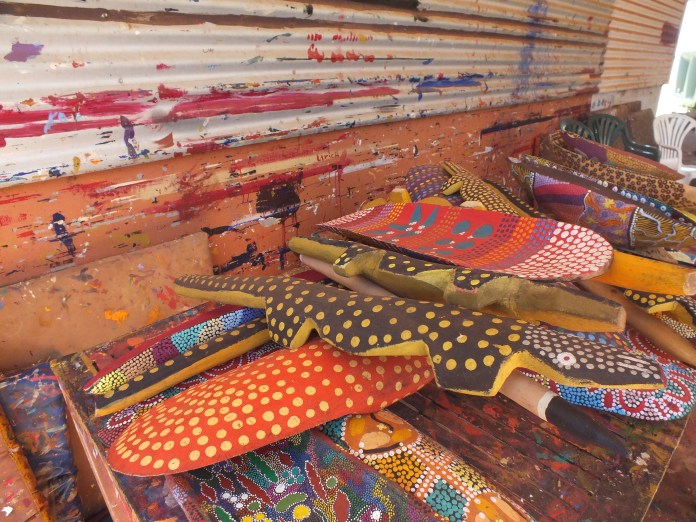
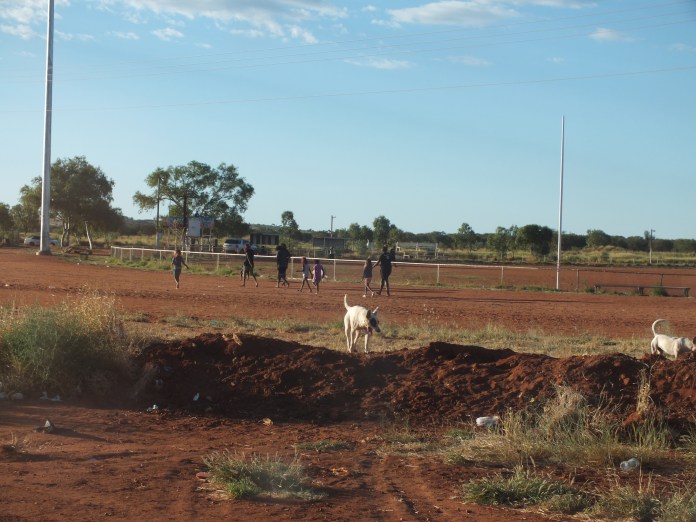
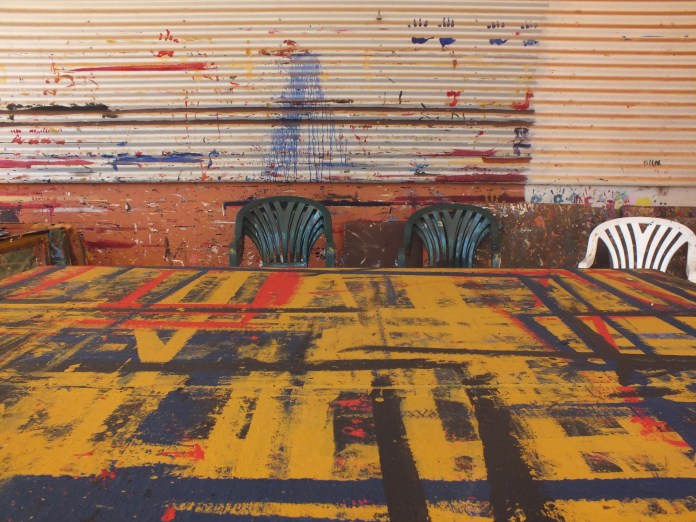
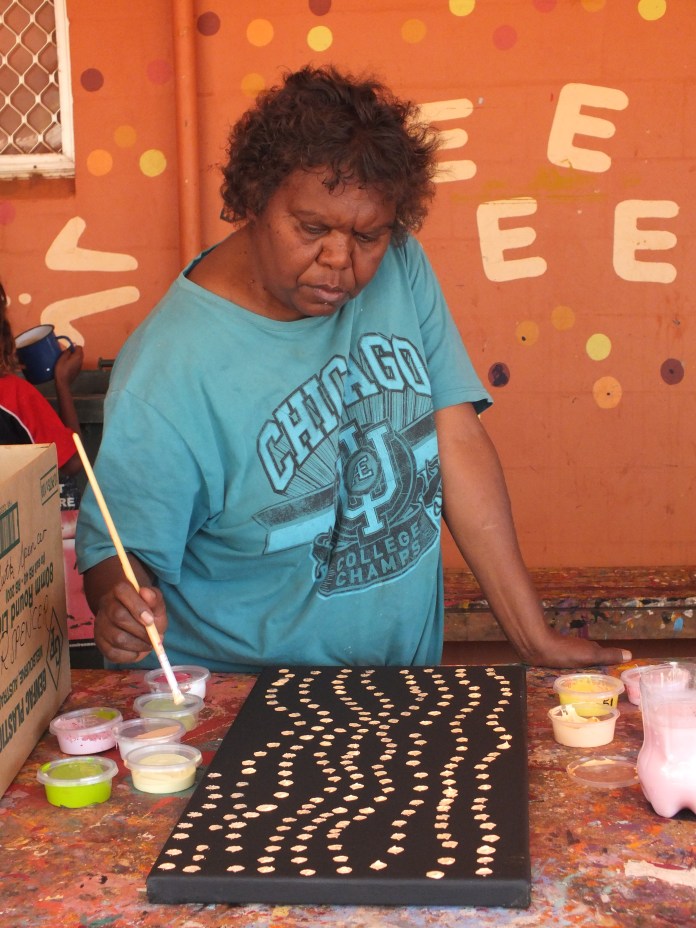
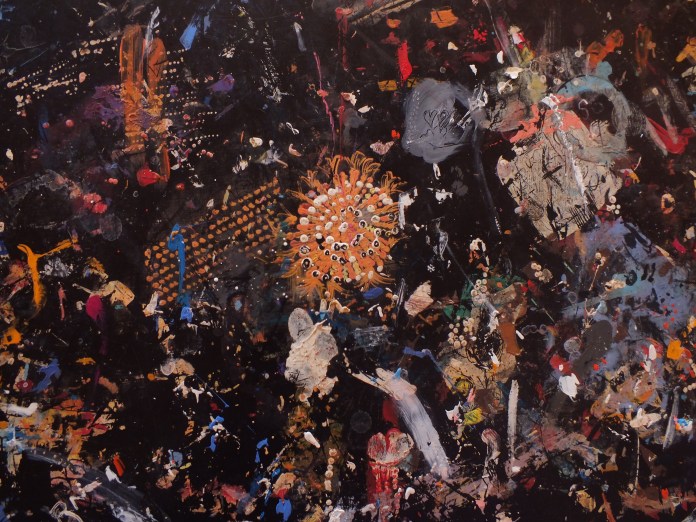
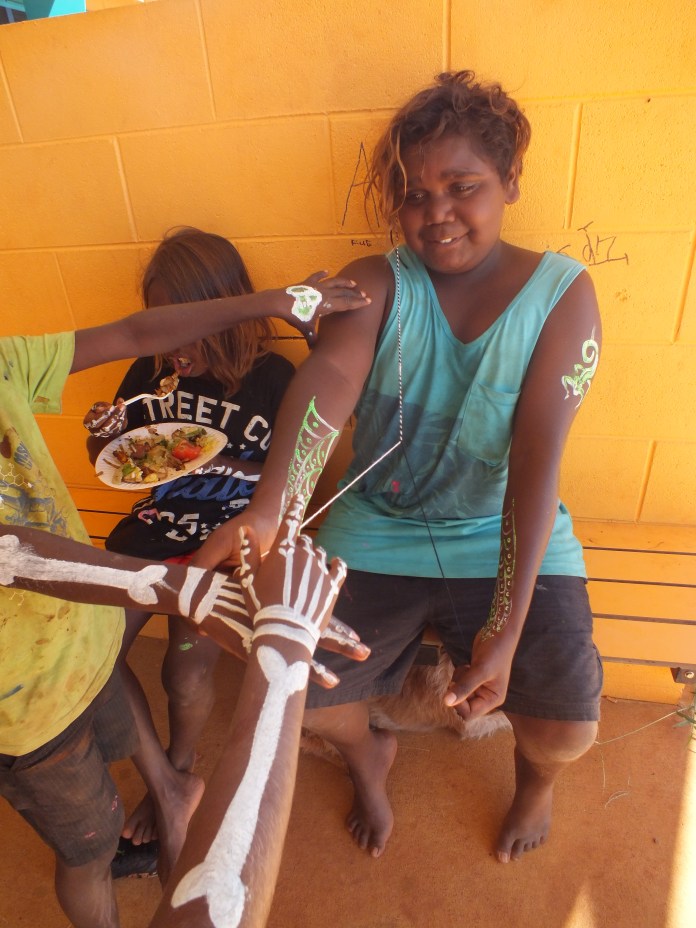
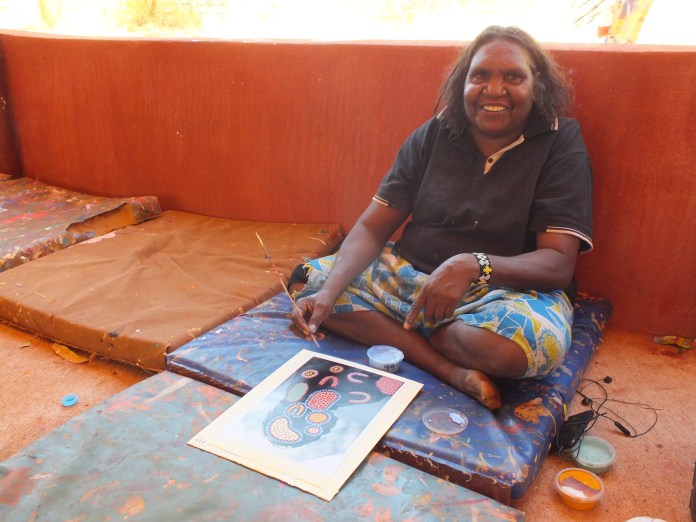
The aboriginal town of Yuendumu is well known, between its brawls and occasional riot, for its art centre. As with almost every service or organisation in the community, which appear to be run exclusively by white people and makes the town seem (to an outsider’s eye) divided into white providers and aboriginal users, this art centre employs young white Australians and welcomes volunteers from around the world. They need as many workers as possible because the scale of production is practically industrial. Anyone in the community can come and paint, and on the whole it seems to be a way to earn money rather than the practice of a traditional culture. The works are usually traditional, depicting a story or dreaming from the land around, yet sometimes it is the non-indigenous staff who teach the aboriginal artists how to paint a particular image. It is an intriguing collaboration and meeting of cultures, and often seems driven entirely towards economic success. And they are very successful: every day we sent paintings off across the world.

In the week I spent there, we primed and prepared canvases, made up pots of paint, tagged and unpicked paintings, processed artworks, and tidied the gallery, all day long. But much of the work was fetching cups of tea for the artists, handing out sandwiches, moving pots of water and cushions for them, or microwaving their lunch. I felt uncomfortable doing a lot of this: was this demanding behaviour an expression of long overdue entitlement, or laziness, dependence, or even resentment? There were big cultural differences on every level, even between our western expectations of politeness and friendliness, and aboriginal ways of communicating and socializing. But my time here was too fleeting to get to know people, to go beyond superficial encounters and cautious eyes. It was, nevertheless, an extraordinary and rewarding week, and among the most magical, dramatic and strangest I’ve ever experienced.

DSCF3295

Next door to the art centre lived an ancient lady called Rosie. She was frail and thin with wild white hair, and would stand at the fence watching us. One afternoon she beckoned me over, gripping the fence tightly, peering through the wires, and pointed upwards towards the branches. She told me to listen, and we stood there looking at each other and listening to the birds over the barking of dogs and music from a distant radio: ‘baby bird… there… not that one – that one… baby bird – there… there…’

The first night I arrived, I was taken to visit her by Juliana, a Columbian woman who had an amazing skill for getting on with everyone. It was dark and Rosie was sitting outside her house on a metal box. Inside I saw bare painted concrete walls and no furniture besides the metal sink. Around her neck was a necklace of seeds and a big wooden cross. She started talking, moving between English and Walpiri, telling us about her old land, the missionaries, and the family that had left her. She wanted us to know the Walpiri words for everything and kept translating for us. ‘I’ll give you a skin name’ she said to me. ‘Naparrula’. There are 16 skin names, and they form a very complex system for determining who you can marry.

Rosie talked and talked and talked, with her sandwich uneaten in her hand. We tried to get her to eat, but no matter how much she insisted ‘I’m hungry’, the sandwich lay uneaten in her hand. She wouldn’t let us go. She grabbed hold of Juliana’s wrist with one hand and her breast with the other. ‘Lampurna, lampurna’, she repeated, taking hold of her own breast. ‘Milk, same word. We all women, black and white’. As we tugged away, Rosie pulled Juliana’s wrist harder and looked up. Her hollow face was lit on one side as though in a film. ‘Pray for me’, she croaked. She looked up at us, and let us go.

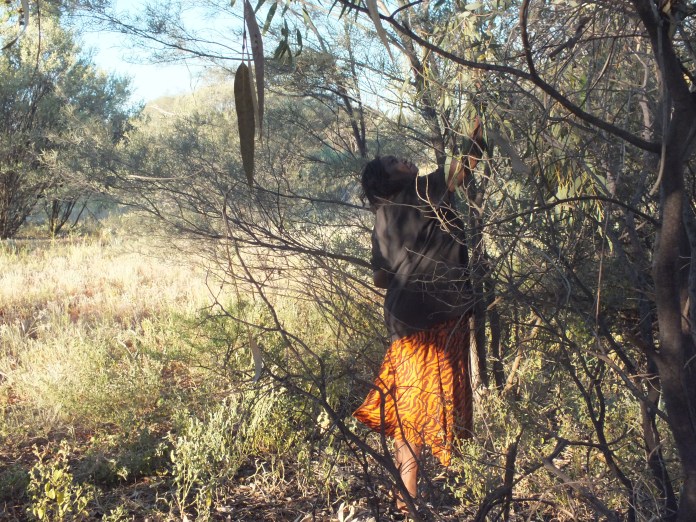
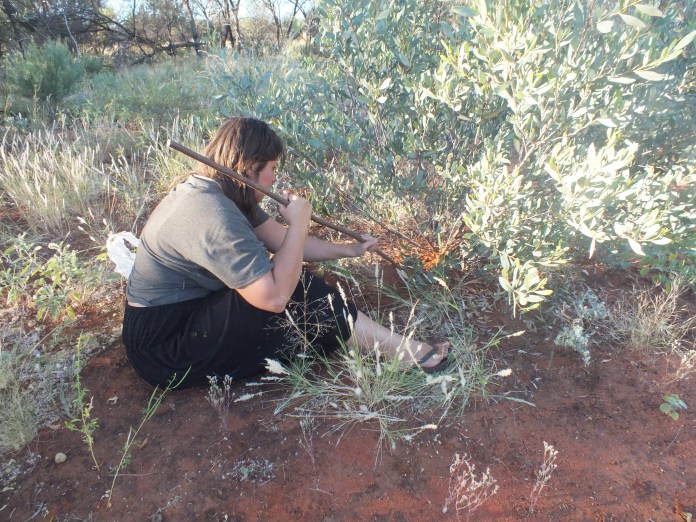
It was the older women who were the most open and generous. Dorothy was a healer, and she took us hunting for bush tucker. Inthe evenings we drove around in the art centre’s ex-army land rovers, whose wooden benches in the back were cushioned only by the dogs that piled in with us. Off the roads, we started wandering through the bush. We looked for shells of insects underneath bushes, and started digging among the roots of the wittchety bush for grubs. We searched the vines in trees for the elusive green fruit of the bush banana. Suddenly, walking past one big tree we bumped right into gnarled pale grey balls hanging from the branches: bush coconuts. If you crack open the coconut there is a large sweet juicy worm you can suck out, some pink fly eggs (a bit of extra fibre), and the hard white flesh of the coconut which is slightly bitter.

DSCF3346

DSCF3343

DSCF3376

DSCF3218

Another day, while we were working in the gallery, a wailing started next door. Someone was crying. Within seconds others started joining in, shrieking and moaning, hugging each other, shaking hands, tears flowing freely. Painting immediately stopped and everyone got up to join the crying for the rest of the day. That afternoon the sounds of wailing and moaning gave the town a haunted atmosphere. A few days later, as we drove out of town, we passed a sorry camp: a collection of mattresses lying outside on the sand where people were sleeping.

DSCF3284

Among the volunteers at the art centre was an Irish ceramicist. It was suggested we go out and find some clay to have a pottery class, so, taking Dorothy with us, we drove to a dried out creek and started digging in the hard earth. We suddenly stopped. Dorothy was looking very uncomfortable. You cannot remove stones from the ground because they are sacred, but you can take away earth. We weren’t sure about clay. Nor was she, it seemed. Although she said it was alright, there was something uncomfortable about the whole thing. But we took the lumps of clay, soaked, strained and dried it out, and ended up with a beautiful reddish brown clay. The plan was to fire it outside in a bonfire the following week, so I’ll have to wait and see how it went.

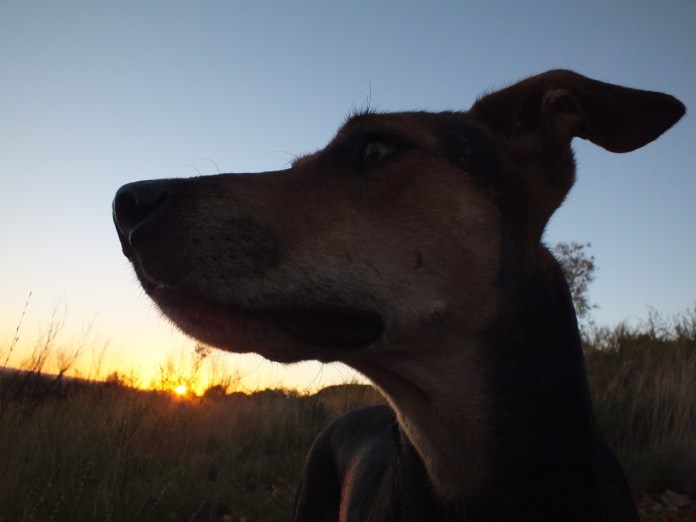
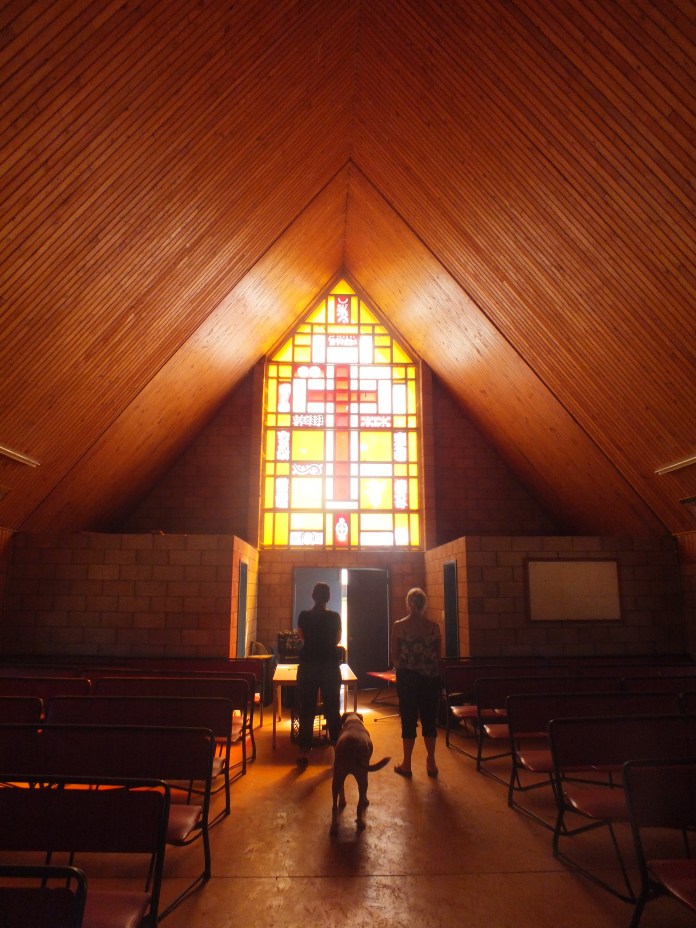
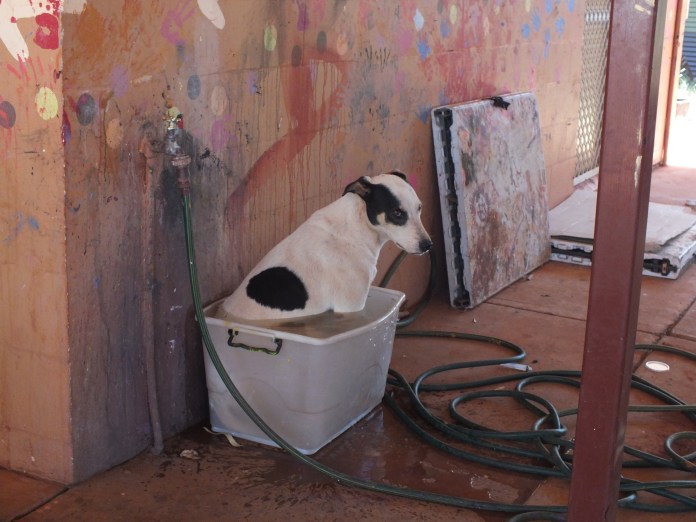
The town itself was dusty and dirty but had a great sense of community. Passers by would engage you in conversation, even if their dogs weren’t quite as friendly. Every time we walked out our gates and barbed wire fences we would be accompanied by at least three dogs, who essentially protected us from unwanted attention. The dogs went everywhere, even into the old Baptist church with its beautiful paintings and strange faith which combined Christianity and dreamtime. They sat on the paintings which had just been sold for thousands of dollars. They took me through the bush at sunrise, seemingly aware of the traditional belief that if you don’t ask for permission, you get lost. They fought in the dust as we lay on the dirt by a bonfire, stargazing. They had their parties while we had ours, revelling in the illicit pleasure of alcohol in one of the few houses with an alcohol permit. There was Ben the dingo, the most graceful and fastest dog of them all, Rosie, who was unaware of how fat she was and would knock you over in eagerness, and Daisie, who couldn’t go five minutes without a cuddle.  And there was Blackie, Kira, Ziggy, Raya, Plummie…

I wish I’d had more time to get to know people, to get to know the culture, to learn Walpiri, to understand the stories of dreamtime in the paintings and the landscape. But it would take more than a lifetime.

DSCF3283

DSCF3398

DSCF3425

DSCF3328

DSCF3406

DSCF3381

DSCF3313

DSCF3370

DSCF3336

DSCF3304

DSCF3323

DSCF3464

DSCF3459

DSCF3319

Standard

Mt Dennison

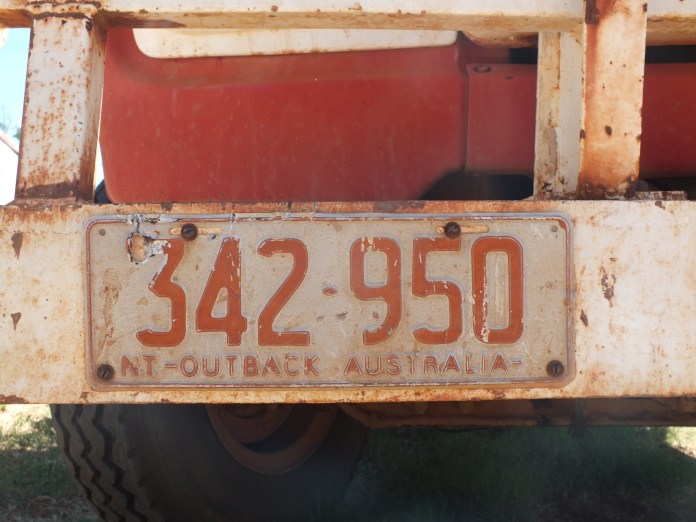
The Red Centre. The Outback. The Central Desert Region. Vast horizons, cloudless skies and never-ending straight roads draw me here. I want to know what life there can be in such an inhospitable environment. Heading north west out of Alice Springs, towards the Tanami Desert and the vastness of Western Australia, is the small aboriginal town of Yuendumu. Most of the remote communities in the Northern Territory are serviced by an amazing bus service called the Bush Bus, which acts as a kind of motorized walkabout for locals who don’t have the 4x4s of cattle stations or the government. On the bus I stuck out as the only white passenger, repeatedly questioned about where I was going and who I was seeing, though I could barely understand the broken English which intermingled with indigenous languages. Along the way we stopped off in Yuelamu, a closed community off the main road, and it was the first time I’d been in a fully aboriginal town. There are only about 100 residents, and you need a permit to access the land, but there was a lot of activity: people wandering along barefoot, driving their suburban cars along dusty red roads (I wondered how they’d managed to bring those cars here), children playing in an old playground strewn with cans, plastic bags and blankets. Women came out to greet the bus with their babies. It felt a quiet place, remote and yet somehow crowded.

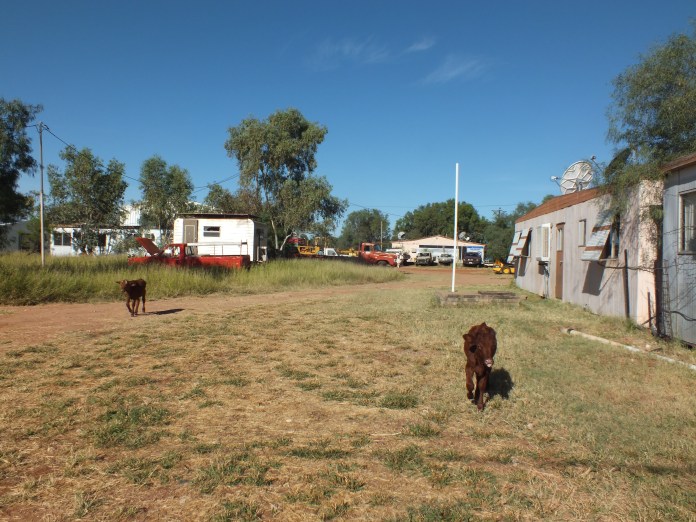
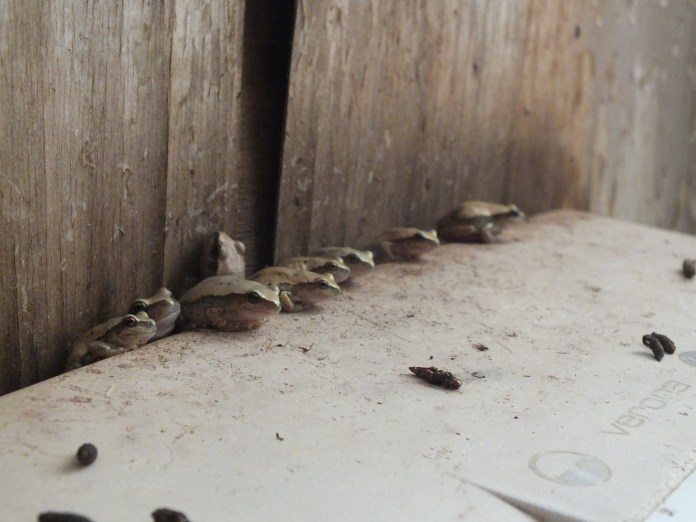
35km from Yuendumu is Mt Dennison, a cattle station 300km north west of Alice Springs. The station is 3000 square kilometres – 60km between the furthest points, or a one hour drive across – and says it has 5000 cattle. It was hot. I was shown to my own little house, which had no air conditioning and was even hotter. The bathroom was infested with frogs and the peeling walls, broken cupboards, patched lino floors, mismatched bedding, everything, was covered in gecko droppings. I tried to use the toilet in another volunteer’s bathroom, but it stood at a 45 degree angle and there was a big hole in the floor, so I simply had to make friends with the frogs – I would get no sympathy here. The next morning our electricity wouldn’t come on. ‘Welcome to the outback’ said Dianne.

DSCF3023

DSCF3065

Dianne runs this family cattle station, but she is widowed and her six children have left home so she now manages the place alone, helped only by one employee and an uneven trickle of volunteers. I asked if she felt isolated here. ‘No, the bitumen extends almost all the way to Yuendumu! And it’s only three hours to Alice.’ These distances are starting to seem small even to me.

Breakfast was at 6.30am and work started at 7am. Every morning we had a beautiful sunrise over the fields of long grass, and as soon as the sun was up, work began. In these semi-desert conditions, watering the garden was a major job. They’d had a lot of rain over the summer, but nothing for the last month. I managed eight hoses simultaneously, flooding each plant and tree for up to 20 minutes each. But weeding was wonderfully easy in the sandy soil. By 11am it was too hot for me to work outside: on several occasion the (admittedly not terribly reliable) thermometer read 44 degrees – and it was always hotter inside my room… I could have watered the plants with my sweat by that point. My pale Tasmanian skin gave me an excuse to go inside.

DSCF2914

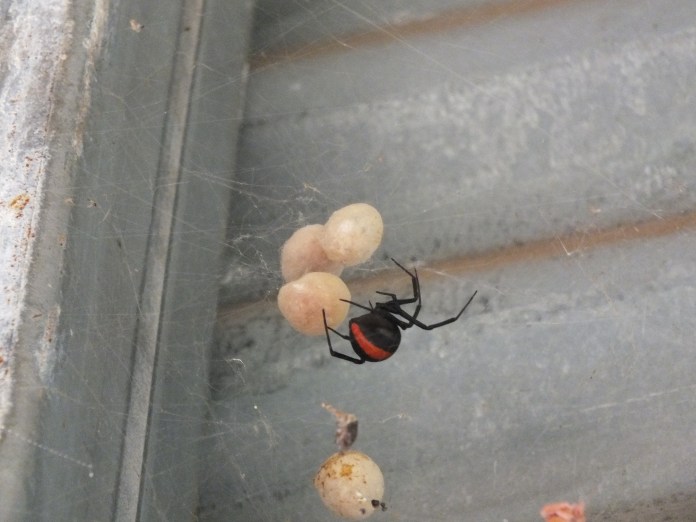
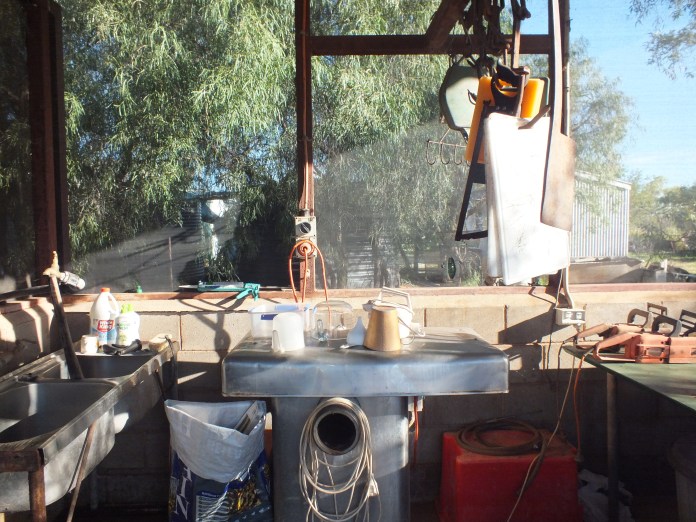
I cooked for the boys and cleaned the decaying homestead. From the garden at this time of the year we had an endless supply of chillis, lemons and limes, while the various cool rooms were piled high with crates of milk, apples, butter, peppers and beer. The freezers were filled with steaks, salted beef, stewing beef and sausages, and the pantry was so well stocked it would rival any shop. Housework here was not simply about appearances or creating a pleasant living environment, but was a matter of safety. Poisonous spiders were allowed to live over the barbecue, but not underneath chairs or on the hat stand. Centipedes in the house had to be crushed and disposed of. Grass was a fire hazard and had to be cut.

DSCF3158

DSCF3141

I was surprised that I actually saw any cattle at all. They live completely independently, partly due to the nature of the land and partly because a lot of work simply hasn’t and isn’t being done. Many of the fences have collapsed, meaning the cattle can’t be managed and simply roam free alongside the wild horses. The exceptions to this were the ones who were hand reared as calves and now choose to spend the rest of their lives around the homestead. It was my job every evening to make up the powdered milk and feed the calves using an old beer bottle. They were aggressive and fought for the bottle, head-butting each other and me, stamping on my feet and trying to wedge themselves between my legs or between me and whichever calf I was trying to feed. But by the end I realised that if I stuck my fingers into their mouths, they would suck on them and keep quiet (while cutting off most of the blood from my fingers). It was very cute to watch.

The actual number of cattle, I was told by the one man employed there, was probably closer to 12,000 than 5,000. He was aboriginal (and ‘becomes more and more blackfella the older he gets’) and spoke a beautiful type of rippling, fluid English I’ve never heard before – real Australian slang as only aboriginal people seem able to master with complete dexterity. Even the simplest affirmative answer had to be extended to ‘Yeah bloody eh’. He had incredible stories of the old musters on horseback, sleeping in swags, roaring up fires for hot baths, living on dampers and camp cakes. He taught me about fencing, road building, paddocks, traps, types of cattle, or how to use animal tracks to find water in the outback. When he and Dianne chatted during smokos, I could just about follow, but dinner conversation was beyond me – I just sat back and enjoyed the sound of their speech.

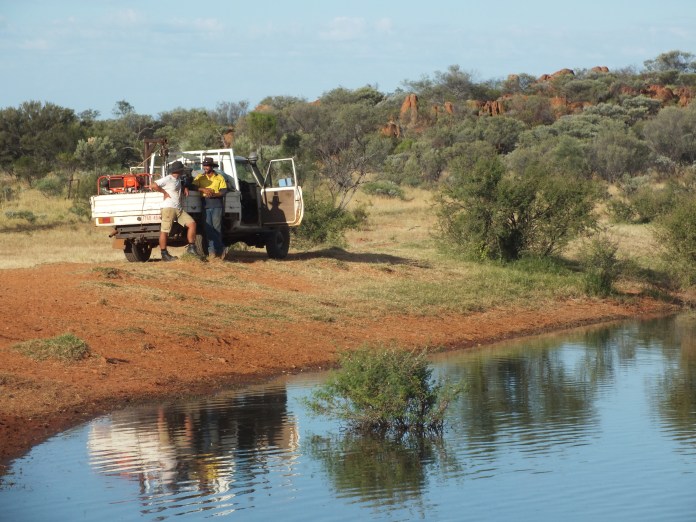
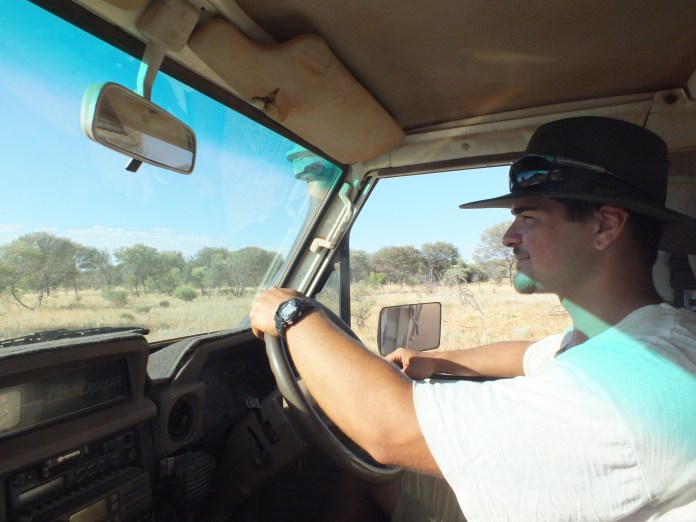
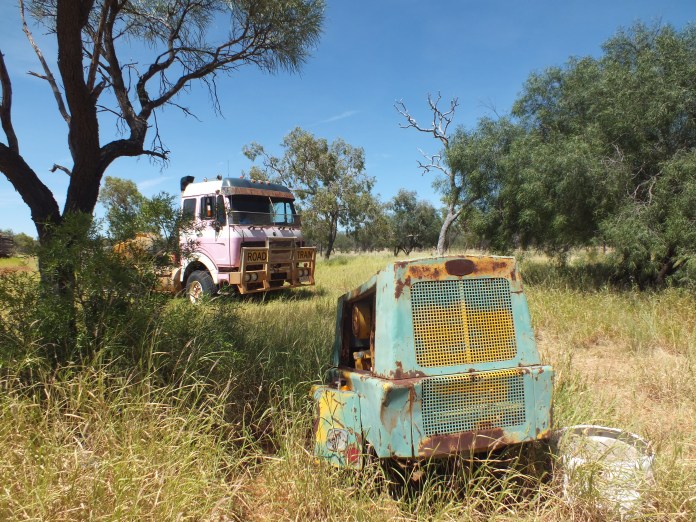
My favourite times were when we went driving across the station. Going to the tip was like going on a journey through time, from rusting cars from the 1950s to typewriters with clumps of grass growing through the keys, collections of washing machines, mountains of tyres, and pile after pile of metal poles, wheels, screws – anything you needed could be found there. We drove to where the roads and fences were being rebuilt, where herds of wild horses galloped past in clouds of dust and cattle scattered in terror as though they’d never seen such monsters before. Three of us squeezed into the front seat of a truck to go and see a dam, which we found by turning off the road at some unmarked but apparently significant point and driving right over bushes, trees and broken fence lines. I hadn’t expected the landscape to be so beautiful and to have so much character.

DSCF3113

DSCF3086

DSCF3124

DSCF2956

I loved living and working here so much. I loved the heat and being spoilt for sunrises, sunsets and the majestic Milky Way every single day. I loved getting up early and working hard, showering several times a day under water that refused to turn cold in a vain attempt to cleanse myself of red dirt. I loved the afternoons spent inside the cool homestead, drinking icy lime sodas, being domestic or doing patchwork, and listening to a calm Englishman’s voice reading Smiley’s People, while outside in the sweltering heat the grasshoppers and lizards and cockatoos carry on living, just as they always have.

DSCF2923

DSCF3039

DSCF2967

DSCF3139

DSCF3072

DSCF3081

DSCF2947


Standard

Adelaide

DSCF2870

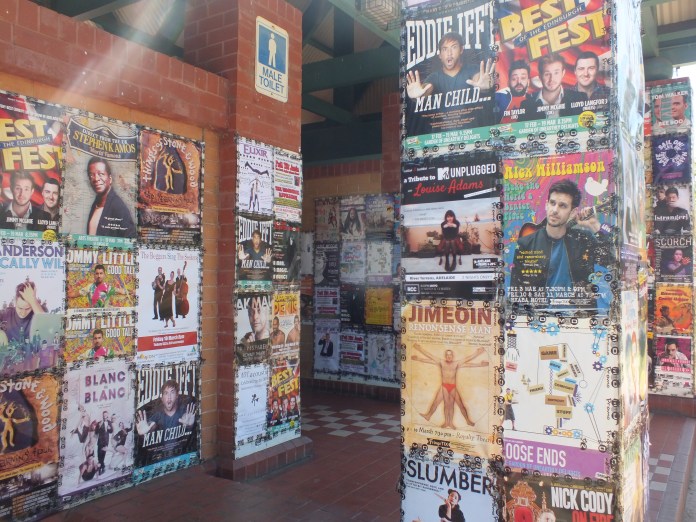
Mad March is the time to be in Adelaide! It’s the end of summer, the heat is easing off, the crowds are out and everything is ON. There’s the Festival proper, things high brow and serious, and the Fringe, and then there are all the other events – in just the 5 days I was there we had Clipsal (car racing which drowns out the opera) and Writers’ week. But it’s the Fringe that dominates, with venues like the tantalizingly-named Garden of Unearthly Delights and (slightly more peculiarly named, and a little less exciting) Royal Croquet Club. Giants on unicycles and glittery women in tutus desperately flyered, vouchers for free champagne were thrust into our hands, and the beautiful coolness of evening was accompanied by twinkling lights in the trees.

DSCF2836

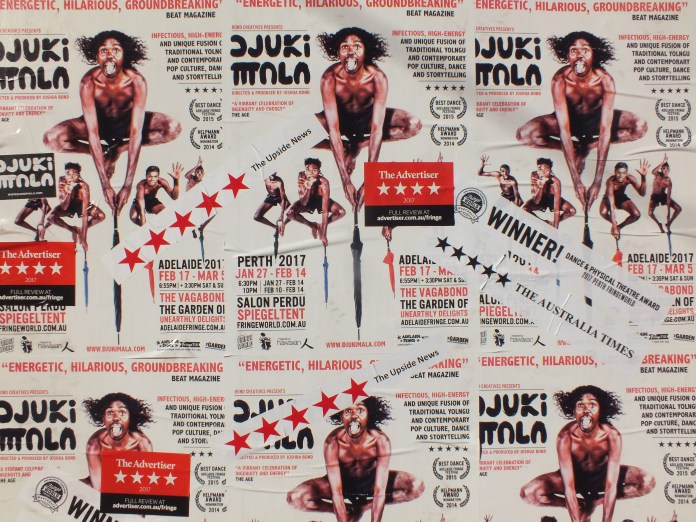
So, the best thing (and sadly, if I’m honest, only thing) that I saw: Djuki Mala. The aboriginal Youtube dance sensation. It started with traditional dancing, what looked like an imitation of animals and hunting with spears. The audience clapped politely with a slight air of disappointment, until all of a sudden bright lights came on, the music changed and the dancing became frenetic. We now had Singin’ in the Rain and Michael Jackson. The audience cheered wildly – this was what everyone came for. The dance was a mash of as many styles as possible: hip hop, break dance, tap, techno, aboriginal, and all sorts of other things. They looked like they were having so much fun. One of the dancers had his tongue stuck out the whole time and looked totally mad. In between dances were videos from Arnhem Land describing the stories of the group. The whole performance was funny, exuberant, energetic, feel good entertainment.

DSCF2863

The other really fun thing was a virtual reality arcade: I sat on a stool wearing goggles and travelled on rollercoasters, took part in a seance and got stabbed in the eye, saw a blue whale swim right past, and was eaten by a spooky black ghost.  It was completely immersive and tiring, but if this is the future of cinema, bring it on!

There’s so much to see, and I do enjoy things for free – but I wish I had money to do more things.

DSCF2851

DSCF2852

DSCF2846

DSCF2842

20170306_184437

20170306_184629

20170306_183934

Standard

The Tarkine

dscf06401

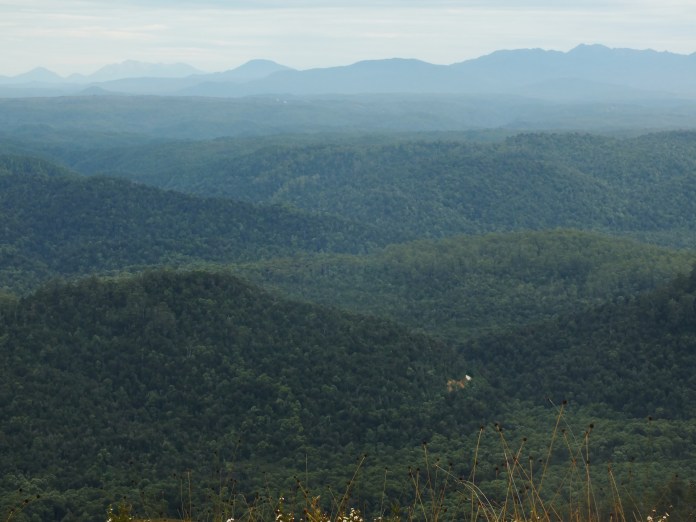
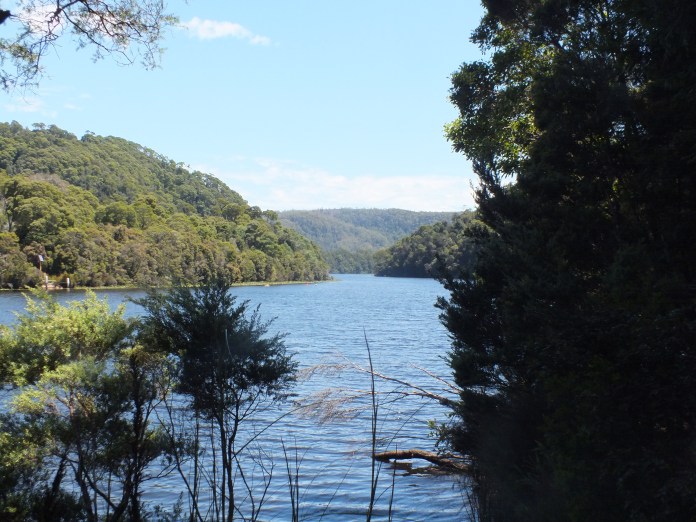
The Tarkine drive is slightly controversial, and I felt rather guilty for being able to drive straight through it, but it was so beautiful. We passed through forest for logging and fire damage before reaching the panoramic views of forested hills and mountains, and then descended into rainforest. We arrived at the ghost town of Corinna, an abandoned mining town which is now used as a ‘wilderness lodge’.  The camping spots were idyllic, on the banks of the Pieman River and underneath giant manferns, but were absurdly expensive – just because they can be, I suppose. Fourth item lost: my watch (that was actually useful).

dscf05701

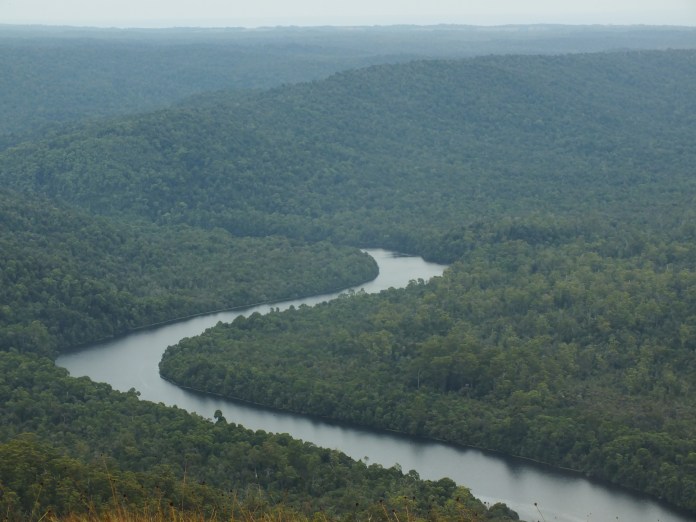
I went on a final walk with Melanie up Mount Donaldson, again posing for photos and mapping the route. We passed through thick bush and then climbed up to exposed mountainside covered in flowering tea trees, with incredible views of the Pieman River snaking through the forest.

dscf06651

Back in Corinna, I realised how stuck I was – in the middle of nowhere with no way out. Hitchiking wasn’t really going to work. I contemplated begging, and asked a few people, but nothing before the following day. Then, as I sat on a log (far away from the baby snake just spotted), another miracle: a Frenchman came up and asked if I was looking for a lift. He didn’t say he was going anywhere and said he could take me south to Zeehan or to a beach where there might be a nice sunset – all a little vague, and he looked pretty cocky and not someone I would get on with, but I badly needed a lift. While he packed up his car, I ran off to see the huon pines, Tasmania’s famous tree which is incredibly slow growing, hard-wearing and water resistant. They were decimated by logging, but not all were cut down. These ones survived because they had become misshapen through flooding. I’d expected something more ostentatious, massive moss covered trunks or something, but they were rather small trees, wizened and grey with little, unremarkable leaves. I guess that’s why the early loggers didn’t worry about cutting them down. Or perhaps it was just the anticlimax to six months of hype about the huon pine.

dscf06981

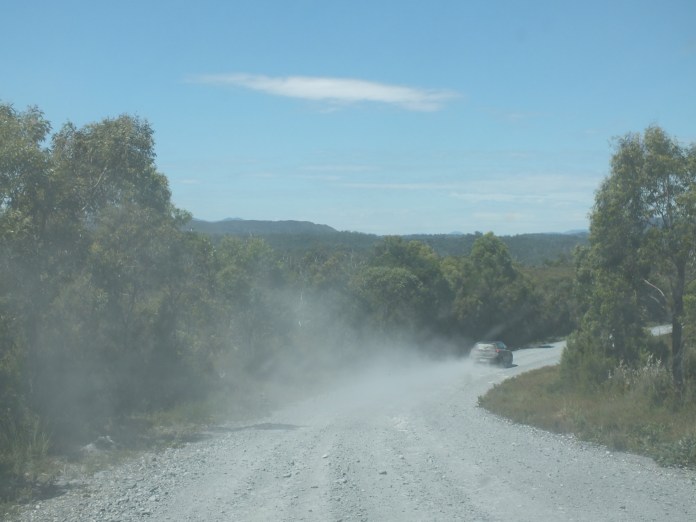
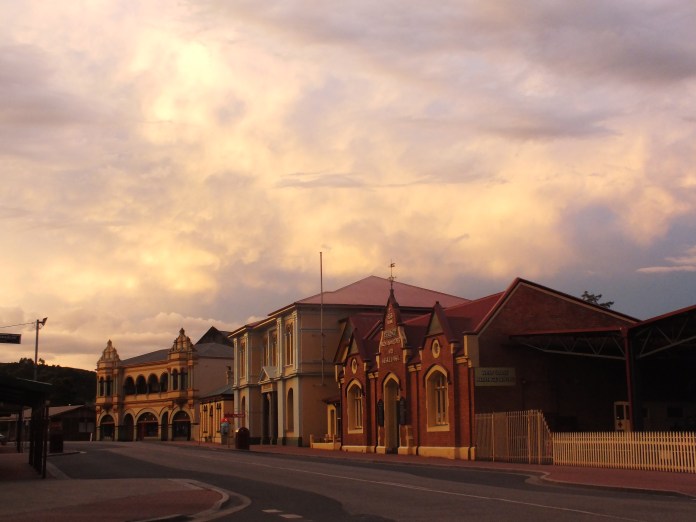
Back at Corinna, Julien had finished rearranging his car and bought a ferry ticket to cross the Pieman River. It was a squat platform more like a barge than a ferry, and was pulled across by a cable, taking one car at a time. Once we were were across, we were flying down the gravel. Julien had been in Australia for more than two years and had turned bushman, living in his car or tent, moving from one national park to another, roaming wild and befriending kangaroos. He’d only just discovered Tassie but had fallen in love with it. We arrived in Zeehan and stopped for dinner. Out came the french kitchen – garlic, knives, chopping boards, pans, avocado, grated carrot, pink rock salt. In minutes we had a feast. The sky which had clouded over now opened up to cast a pink light over the deserted high street, another relic of a bygone mining era. And then the clouds returned, the sky blackened, the wind picked up and a storm began. We pitched our tents right in the middle of town by the official monuments, but soon heard the sounds of drunk people shouting and crashing into things. We tried to avoid being seen, but were hardly going to be missed. However, they were the nicest, politest yobs I’ve ever encountered, telling us about their mining jobs, the glorious past of the town, and the story of the Pieman River (named after a convict baker in the vein of Sweeney Todd). And then they apologised for keeping us awake and left us in peace. They might as well have stayed though, because the storm which followed was terrible, blowing rain through my tent, shaking the fences and roves and making sleep impossible.

dscf07091

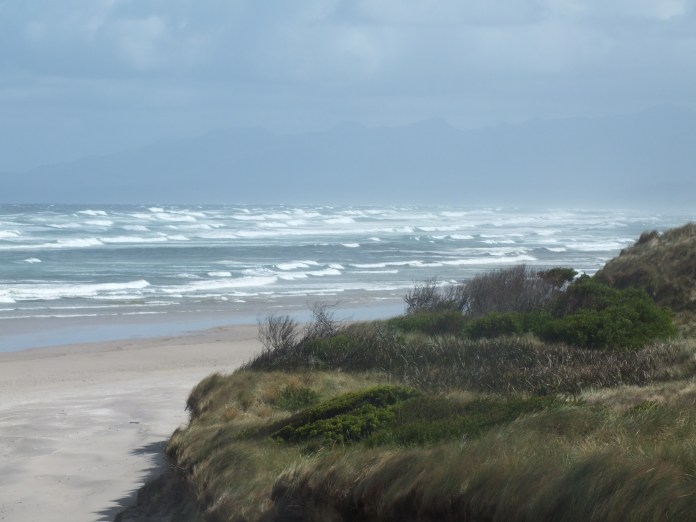
The following morning we scooted off quickly to have breakfast at a scenic lookout (out came the French kitchen again), then headed down to Strahan. The ocean looked rough: waves crashing as far as the eye could see, both ahead and to either side. The seagulls struggled just to stand still, doing funny little sideways walks when the wind got too strong. It was a spectacular sight.

dscf07201

dscf07391

My second lift of the day came from a local, who needed someone to talk to about his family crises. It felt like a therapy session. Then in Queenstown I had to wait the longest time so far (just over an hour) before getting picked up by a Swiss-German couple. They made me tie all my belongings together so I wouldn’t lose anything, then I squeezed into the front and the camper van spluttered on. It was very German, very funny, very interesting, and very exhausting. My final lift for the day came from a fisherman on his way home. He’d been out in the storm and was grateful to have made it out at all, but it was all fine and his crayfish had been safely delivered to Beijing. We went on various shortcuts and he pointed out all the local spots and pieces of history (towns that had completely disappeared and so on). And again, he told me all about his family and their divorces and upsets. So tiring. But what a great way to say good bye to Tasmania.

dscf05791

dscf06141

dscf06282

Standard

The Wild West

dscf03821

Oh, how I’ve been longing and yearning to see the wild west coast of Tasmania! Surf beaches, enormous waves, real wilderness and the majestic Tarkine or Takayna – a vast stretch of temperate rainforest which is constantly under threat from logging and mining (and people generally), and which has inspired great environmental protests and photographs. I really, really wanted to see it, but of course it’s rather hard to get to, especially without a car. But it was now or never – I had to give the ridiculous a chance.

It didn’t take long to get a lift to the tiny surf town of Marrawah. It was in a peculiar little van with fluorescent pink scrawls on its windscreen, driven by a young dairy farmer with white paint on his cheeks and wearing spotless white trousers. He wasn’t actually going to Marrawah, but offered to take me there anyway. We quickly got into theology and post-modernism, and in his virulent anti-establishment world we expressed our support for Trump – it’s a hard life sometimes… He took me to his dairy farm and showed me around all the machinery, turning it on (and letting me stick my thumb in the pump to feel what it’s like to be milked!). He was so proud. It was all extremely run down (and they’d recently had a batch of milk fail a safety test after their cooling mechanism broke down), but at least it was his own and no one could tell him what to do. The rest of the journey was spent discussing grass management.

dscf03162

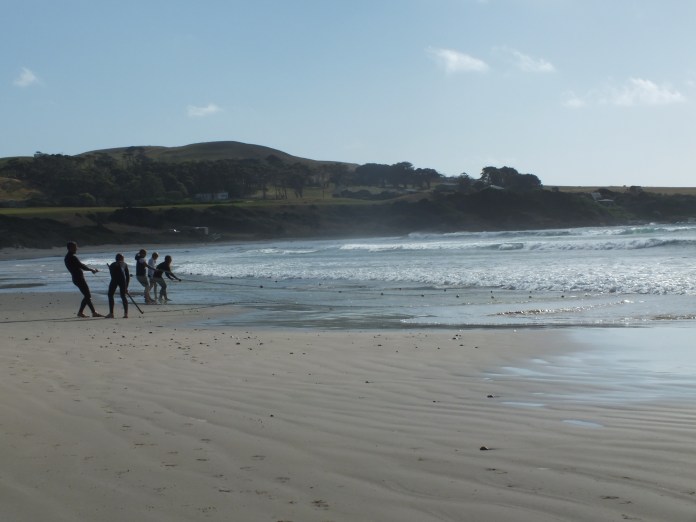
At Marrawah the famous surf beach was calm, with just a family fishing for their dinner by trawling the waves with a tennis net. Right by the beach was free camping. Realising hitchiking would be harder and harder, I decided I should start scouting around for lifts as soon as possible. So I started chatting to an elderly Dutch man in the next door campervan. No lift, but he was full of stories of South America and invited me to dinner. He was incredibly meticulous and an engineer through and through: every single thing had a designated space in the van he’d designed himself, and he told me how to cook pasta in the most exact, scientific (though sadly not very tasty) way. He now travelled to be independent and free.

The following morning the surfers were already out, catching a few waves but mostly waiting. I took my morning swim and tried to wash off some of the dirt. It was a rare windless day and the flies were out in full force, biting and drawing blood.

dscf03402

dscf03501

dscf03591

This was the first time in Tassie I’d had to wait more than 10 minutes for a lift. But eventually I was picked up by a topless, barefoot surfer-rock climber looking for a wave. He said he’d spent five months hitchiking through Alaska so now couldn’t not stop for every hitchiker he saw. When I told him I wished I could surf, he said he had a spare board if the surf was good. But when we got to the next beach the waves were crashing all over the place and onto jagged rocks. Not a good place to begin. There were four surfers flying up and down along waves, twisting and tumbling, but even they were struggling. Apparently it takes about three months of intensive learning to be able to stand and ride a wave. I am seriously considering the investment now.

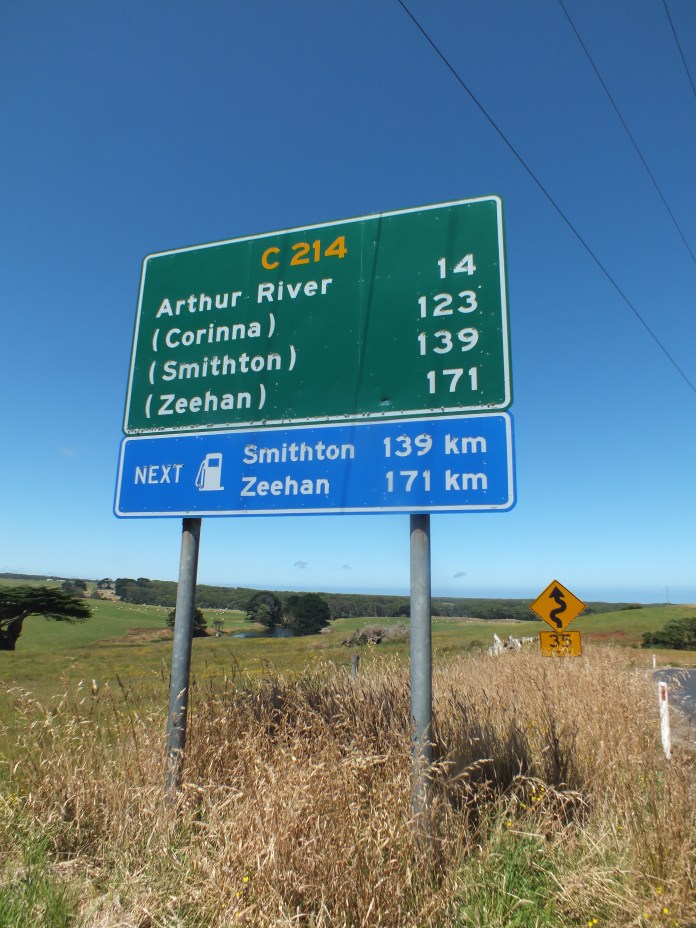
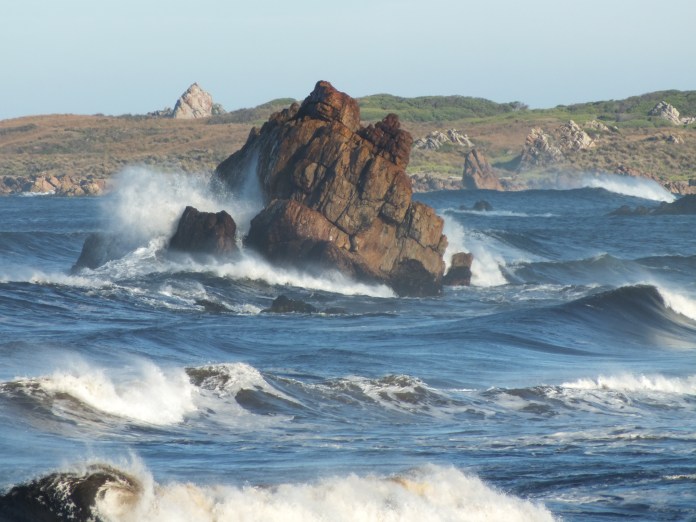
He took me down to Arthur River and we went to see the ‘Edge of the World’. There’s nothing between here and Argentina, and the air is the cleanest in the world. I’m still not quite sure why that particular point is called the edge of the world, but the view was incredible: rows and rows of waves crashing into a massive rock sticking out of the water, dead trees littering the rocky shoreline.

dscf05161

Our ways parted here, the surfer still in search of a wave, and I dithering over my next move. I could attempt to go further south, but I met a French couple who had tried to do the same and had given up and were returning north. The chances were slim that I would make it into the Tarkine – but I would always wonder if I could have done it.

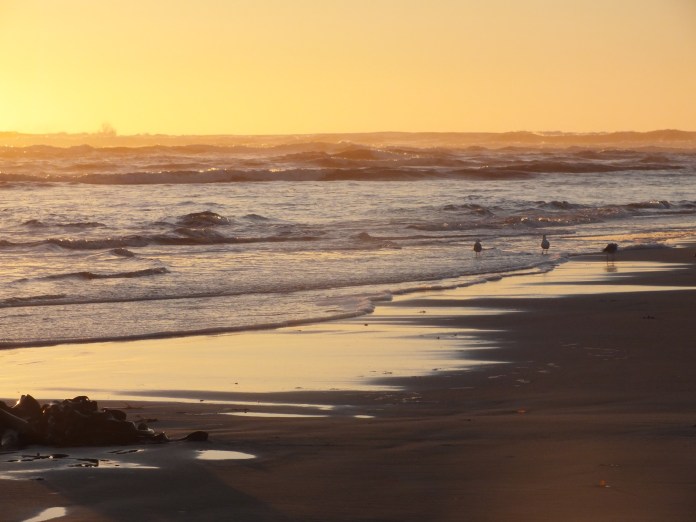
So I went for a walk along the coast, dressed in a swimming costume, t-shirt, gaiters and hiking boots (as recommended, to avoid snakes), and looking completely ridiculous. That evening there was a perfect sunset over the Southern Ocean.

dscf04722

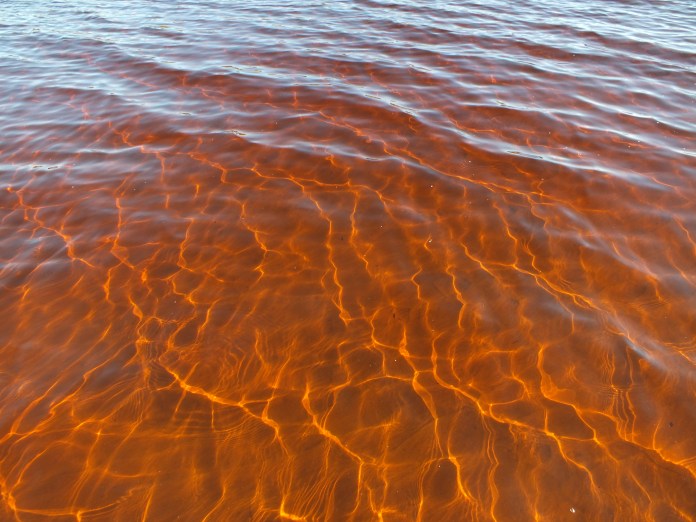
Back in Arthur River locals were swimming in the red water of the river and driving their ancient cars, things that could only be described as old bangers, along the beach (these are beaches which can swallow 4WDs). ‘Where’s the donkey?’ someone shouted. (Did I hear that correctly, donkey?) A few moments later, I passed a donkey munching away by the beach. That evening I saw the same lady driving her car slowly, window rolled down with outstretched arm holding the donkey’s lead and taking it for a walk through the streets.

dscf04431

And then, and then… as the surfer said, when you’re hitchiking you always seem to be lucky. I was brushing my teeth in the public toilets and started chatting to the woman who was also there, and whom I’d seen taking photos of the sunset. She was writing a book on bushwalking and was heading south to Corinna! After heavy hinting on my part, she offered to take me along.

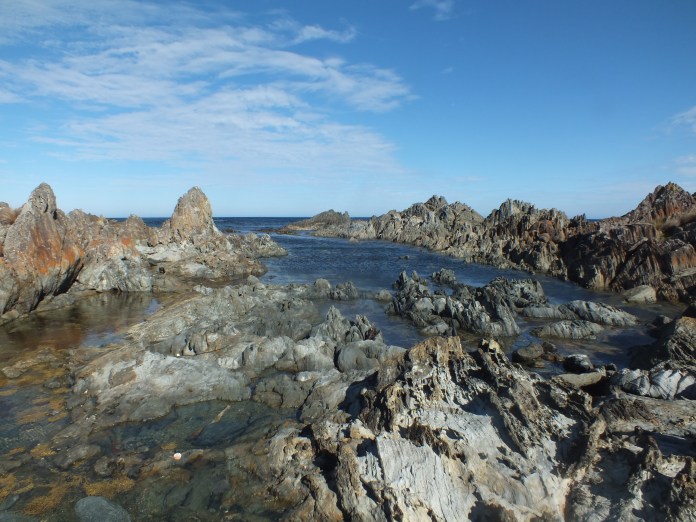
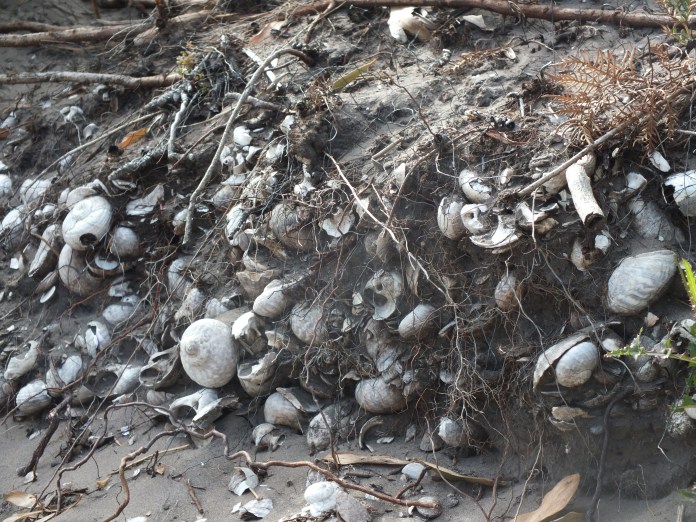
The next morning we left early to catching the morning sun at the Edge of the World, and then stopped off to test out a ‘short’ three hour coastal walk. Melanie carried a GPS to map the walk and a dictaphone to record instructions and observations. She actually seemed quite happy to have someone else with her because it meant that she could have photos of herself for once, and photos of someone walking the walk. So I modelled for her, wading through a little river, climbing some rocks, standing looking out to sea in front of dramatic landscapes. She was also a travel writer so had some incredible stories. As we walked along to Sarah Ann Rocks, a kind of city of rocks, rockpools and tall mounds, we passed a midden, a mass of shells marking an aboriginal site. The sandy 4WD track had cut through the midden, the crushed shells making the track glimmer in the sunshine.

dscf05481

dscf05621

And then we began the Tarkine drive, which was so different it deserves its own post!

dscf04311

dscf05431

dscf04981

dscf04641


Standard

The North Coast

dscf02971

After the heavenliness of the east coast, I needed to see Tasmania proper. Real life and more typical landscapes and so on. Also, rain was forecast and I didn’t want the fragile illusion of paradise shattered.

My first lift from ‘the village’ was in a bright yellow camper van with dream catchers, from a cheerful tanned blond family as Ozzie as you can get. Then at St Helens I struck gold: a lift straight to Devonport, further than I’d ever hoped to go that day. It was from an Englishman who’d taken a detour (just a little one) after finishing a film lighting job for a commercial for the Ashes – Hobart was standing in for England. He had great stories of skydiving and living in a camper van on Bondi beach while being an extra at the Sydney opera house. We stopped off at a cheeserie for tasting, then he left me by the side of the road. Third item lost: my nice little pink water bottle with filter.

30 seconds later, I was picked up by a mother and daughter. ‘We don’t usually stop for hitchhikers,’ she kept repeating, and the journey passed like a job interview. But they gave me lots of recommendations and went out of their way to take me to Penguin.

I’d wanted to see penguins in Penguin, and I saw plenty: rubbish bins moulded with penguins, penguin murals, penguin logos, penguin barber and ice-cream figures, and a 3m tall fibre glass concrete penguin, the town’s pride and glory. But no actual penguins – you had to go elsewhere for them. I did find a shop giving away spinach for free though.

dscf01752

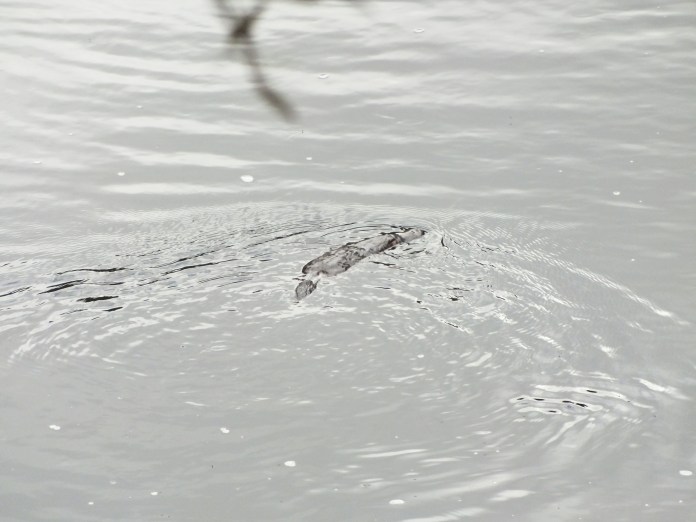
Looking for somewhere to camp, I got a lift from a builder just returning from a job for his nan, who in return had made him a massive shepherd’s pie. I had to hold it the whole way, gazing at the warm, crispy golden crust, the smell wafting up so, so temptingly. He suggested a camping spot: Fern Glade, a quiet spot along a river where you have one of the best chances of spotting a platypus. I did indeed see two, bills exploring the smooth water before their sleek slimy bodies dived under again. But it was an eerie place, an echoey valley given a sinister feel by the distant industrial sounds and the bird calls which sounded creepily human. I pitched my tent behind a block of toilets and tried to ignore the quiet thuds and pants of wandering pademelons.

dscf01942

dscf01922

dscf01881

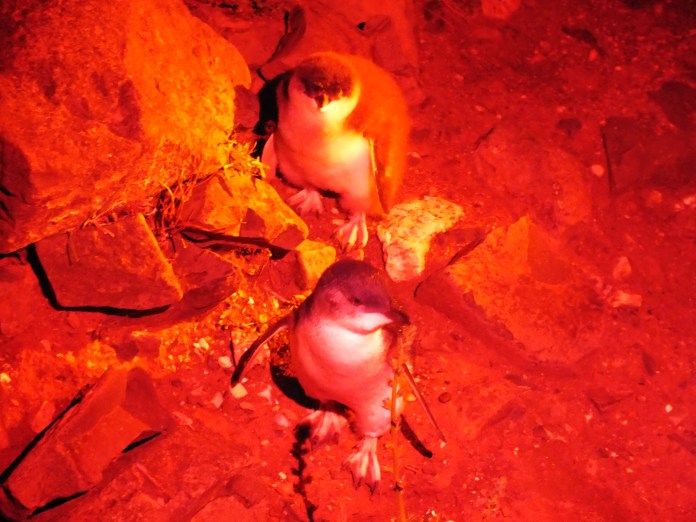
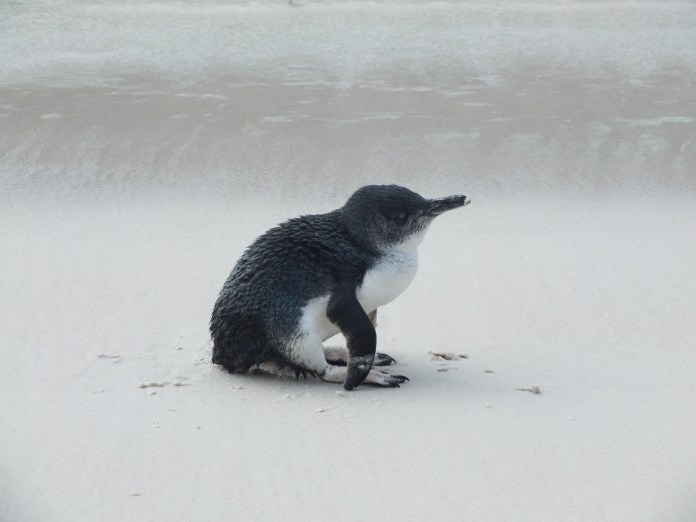
It rained all night so the next day  I caved in and went to a hostel. Burnie is extremely small and quiet. It markets itself as a crafty place, but there’s not much to it. But at last I got to see some penguins! They’re tiny creatures, about the size of a rabbit, and every evening the chicks wait around for their parents to arrive home and feed them. The adults, however, seem to have little interest in their children, and just sit on the rocks for half an hour or longer, letting the chicks squawk and fight among each other. Perhaps they’re trying to toughen their children up.

dscf02012

dscf02081

dscf02581

The next day I went on a drive with an English ecologist, who showed me how many of the plants and birds around are actually British. The whole landscape and ecology has changed so much in the last three hundred years. We stopped off at an aboriginal cave, a 50 foot cleft in a rocky outcrop. There are three major headlands in that area, and the story told is of three older children who were left to look after their younger siblings. The older children got carried away playing and allowed the younger ones to wander  off and die. When the parents returned, they cast out the older children. The three children can still be seen in these three outcrops. Overlaid onto this story was the geological story of the rock – just another story to add to the rich history and readings of the landscape.

dscf02801

Finally we reached Stanley (now achieving even more local fame as a set for the Hollywood film ‘The Light Between Oceans’). It is very quaint, with several chocolate shops and B&Bs advertising ‘colonial accommodation’. The Nut, an extinct volcano (and another outcast child), was very bizarre, and, jutting out into the treacherous Bass Strait, was of course extremely windy (where isn’t it windy on this island?).

dscf03061

The ecologist left me outside Stanley, bidding me farewell to the sound of sky larks. And that was as far as I got along the north coast, the most populated part of Tassie. It was grey and quiet, even though it was in some ways busier than anywhere else I’ve seen here. It felt a lot more connected to the mainland, both in terms of trade and tourism. Waiting on the roadside, with low heavy clouds overhead and not a building in sight, I felt closer to the world than I’ve felt for a long time.

Standard

The East Coast

The East Coast of Tasmania is full of quiet ‘retreats’ – places to hide away from life, to get married on a beach, to escape one’s hordes of admirers in the endless bays of white sand and emerald seas.

dscf99512

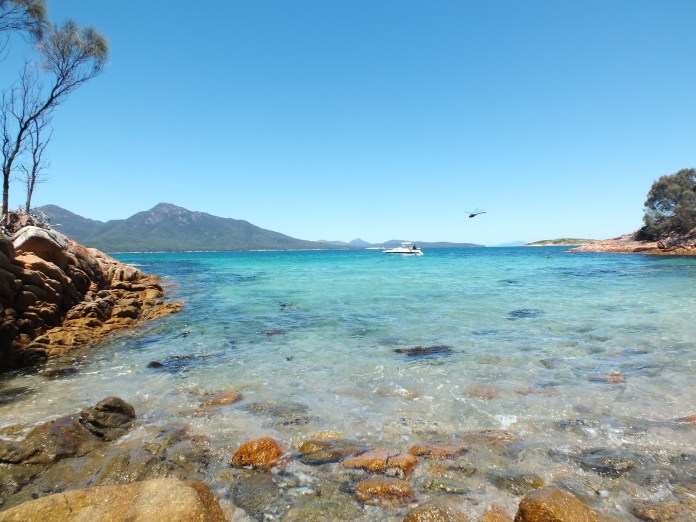
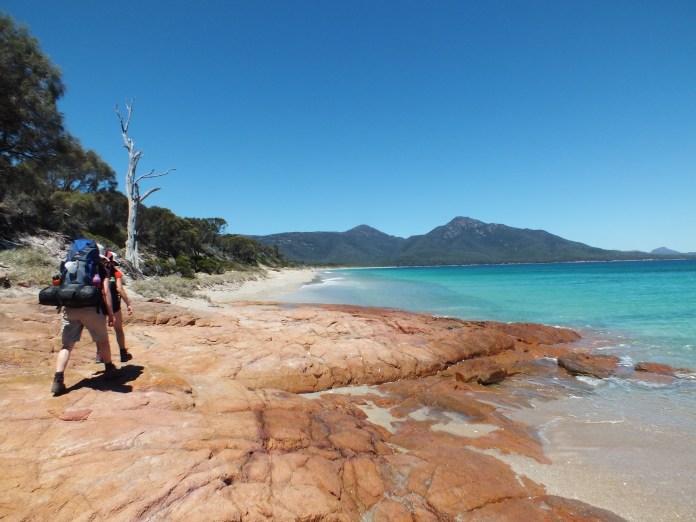
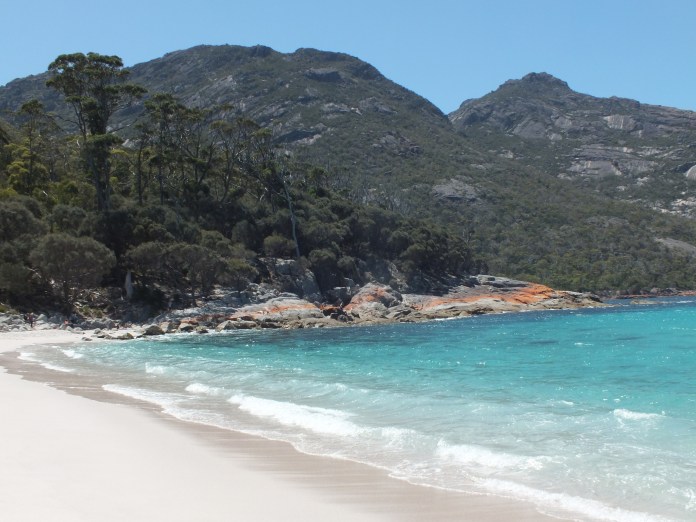
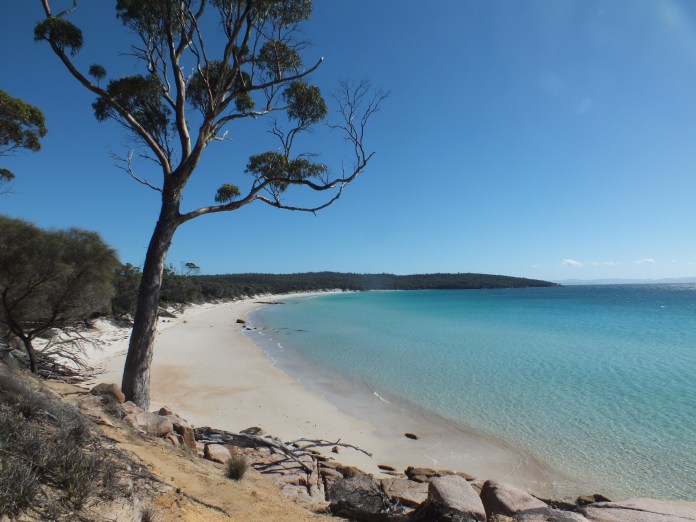
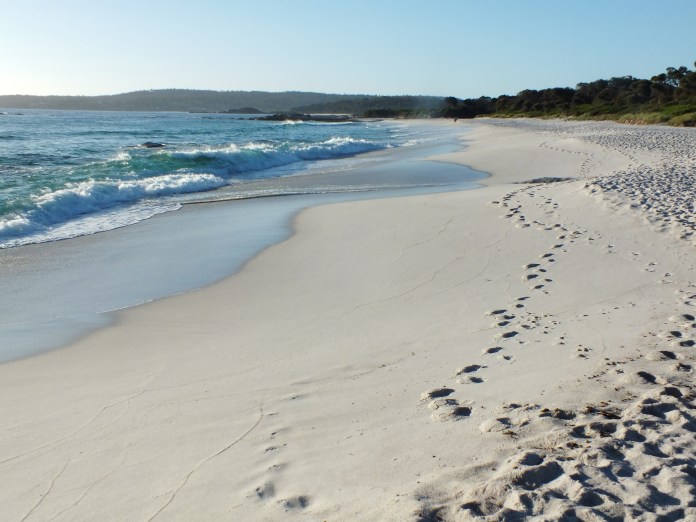
So I also retreated into the Freycinet Peninsula: three days of total loneliness walking through snake-ridden bush and across deserted beaches of paradise. It was hot and there wasn’t a cloud in sight the first few days. The water was clear as glass, so transparent you could almost miss the waves until they knocked you under. In the calmer beaches, alone with the seagulls and oystercatchers, swimming became a kind of floating, drifting over ripples of white sand.

The first camping spot had posters up about disease-carrying mosquitoes, which made me somewhat concerned about the 30 bites on my left leg and massive swellings on my arms. Not much I could do though.

Just before sunset sunset I walked down to the southernmost beach and saw a few boats bobbing around. These beaches were clearly the preserve of filthy hikers and the filthy rich.

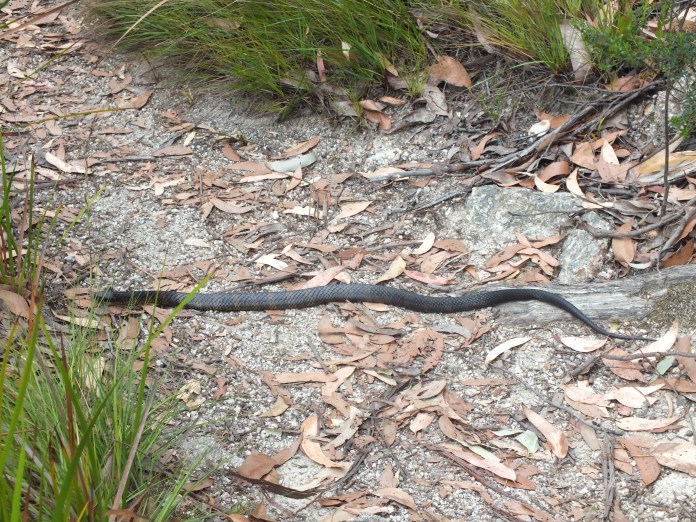
The following day was a 6 hour walk across the peninsula. It was hot and agonising, and my suncream dribbled down in dirty smears all day. The shade disappeared and the path turned into steep boulder scrambling. At the top of Mount Graham all I could do was lie with my back arched over a rock trying to breathe. On the way down I waited for a snake to pass (all you need to know here is that all snakes look the same, they’re all poisonous, and they all have the same antidote), and finally caught a glimpse of Wineglass Bay, the picture postcard shot of Tasmania – a perfectly curved beach enclosed by forested hills. I ran down (until I fell over), then at last dove into the water and floated fully clothed.

However… there was no drinking water. It was the first time I’ve ever had to worry about water: I only had a litre left to last the next day’s walk back up the hill. Following a coffee-coloured stagnant creek until I found a hint of running water, I boiled some for soup. A few plops of rain began so I left out my saucepan to catch some rainwater, but it was bone dry in the morning. I dreamed of streams and babbling brooks.

In the end it was alright, despite waking up with a throbbing ankle which was neither the colour nor shape it should be. I had the bay to myself and swam  in the crystal water until I was so cold there would be no chance of me sweating.

dscf99651

dscf00231

dscf98891

dscf99151

Back at the car park I started hitchhiking. The first lift I got was from a Chinese family in a people carrier. As I crammed myself in, I realised I was bleeding onto everything I touched and so surreptitiously began sucking my thumb. But when we got to the visitor centre my door wouldn’t open: my bag’s buckle strap was caught in the door. We all tried heaving and pushing and pulling but it wouldn’t budge. Eventually, after much collective heaving and huffing, we managed to free my bag and inspect the bent metal of their hire car. They were extremely kind and said it wasn’t a problem, but I walked away extremely embarrassed. A brilliant start.

Recounting this story to some fellow walkers got me my next lift, and then I was picked up by a motorcycle enthusiast in a ute, driving to manage his 24 holiday houses. First item lost: suncream.

The next lift was from a car of English pensioners from east London… We exchanged travel stories of Kyrgyzstan and the Trans-Siberian, and they tried to find me a career path. Our ways parted on a cliffhanger ending in my journey from Russia to Mongolia. I then got a bizarre lift in a completely silent car with two other hitchers. Passing the time blackberrying, I was then picked up by a seasoned, ex-hippy sort of traveller who was very concerned about my lack of suncream and made sure I bought some more. My final lift of the day came from a mother and daughter who not only drove out of their way to take me to the nicest campsite, but drove me around ‘the village’ until I’d found a spot. Second item lost: my big water bottle. Another night of semi-dehydration.
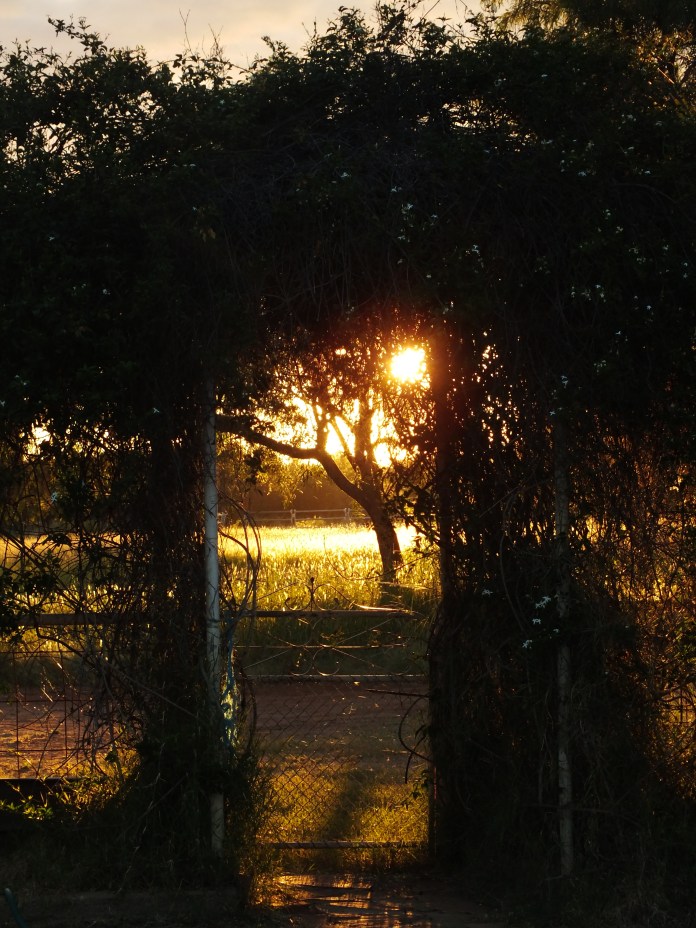
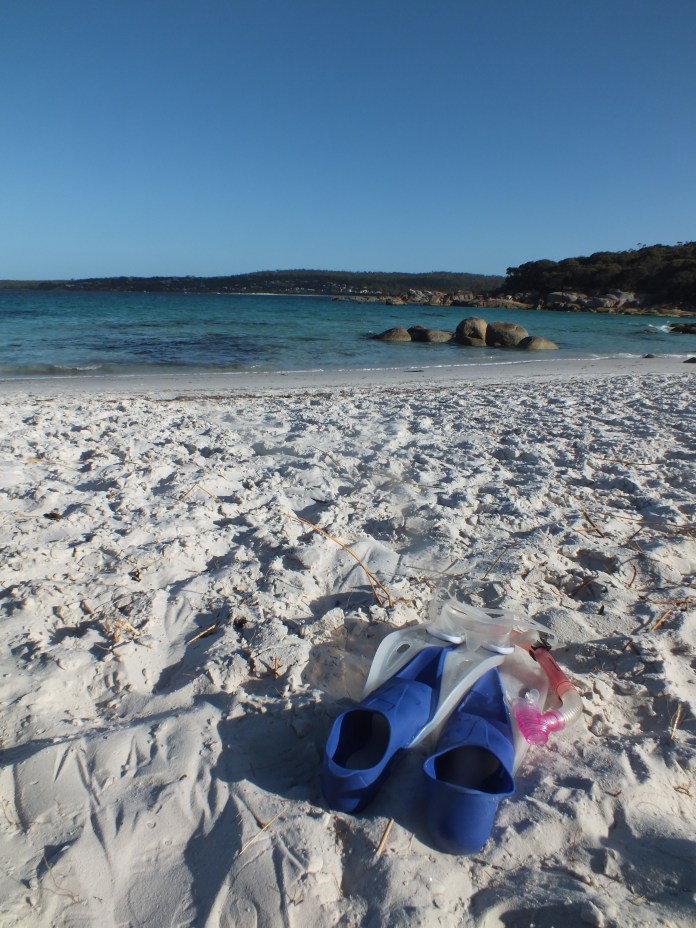
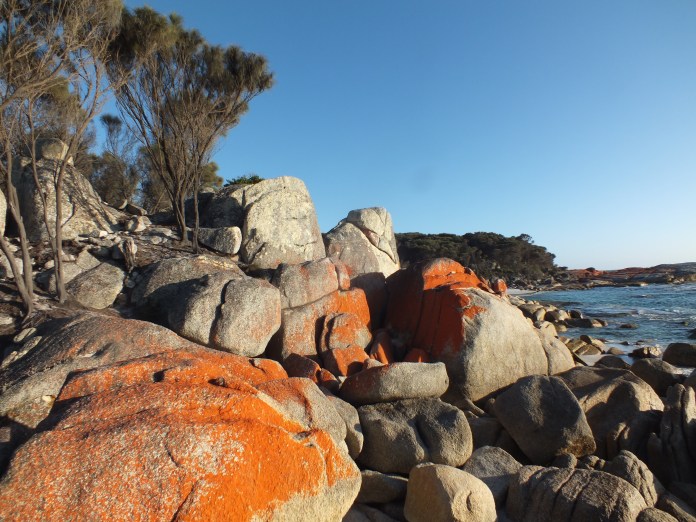
The Bay of Fires had even more beautiful beaches, with massive bright orange rocks. It took an hour’s walk to find a swimming spot, past another snake, but the people from whom I asked for directions lent me their snorkelling gear so I had a fabulous time looking at strange seaweed and shells – though I didn’t see a single fish!! It was horrible returning to dry land and felt all wrong.

It was easy and effortless travelling – perfect.

dscf99951

dscf99811

dscf99391

dscf00651

dscf01402

dscf00302

dscf01341

dscf01421

Standard

A Very Tassie Christmas

On the twelfth day of Christmas
My true love sent to me
Twelve possums playing
Eleven lizards leaping
Ten wombats washing
Nine crocs a-snoozing
Eight dingoes dancing
Seven emus laying
Six sharks a-surfing
Five kangaroos
Four lyrebirds
Three wet galahs
Two snakes on skis
And a kookaburra in a gum tree

dscf8668

dscf8654

dscf8692

dscf8718

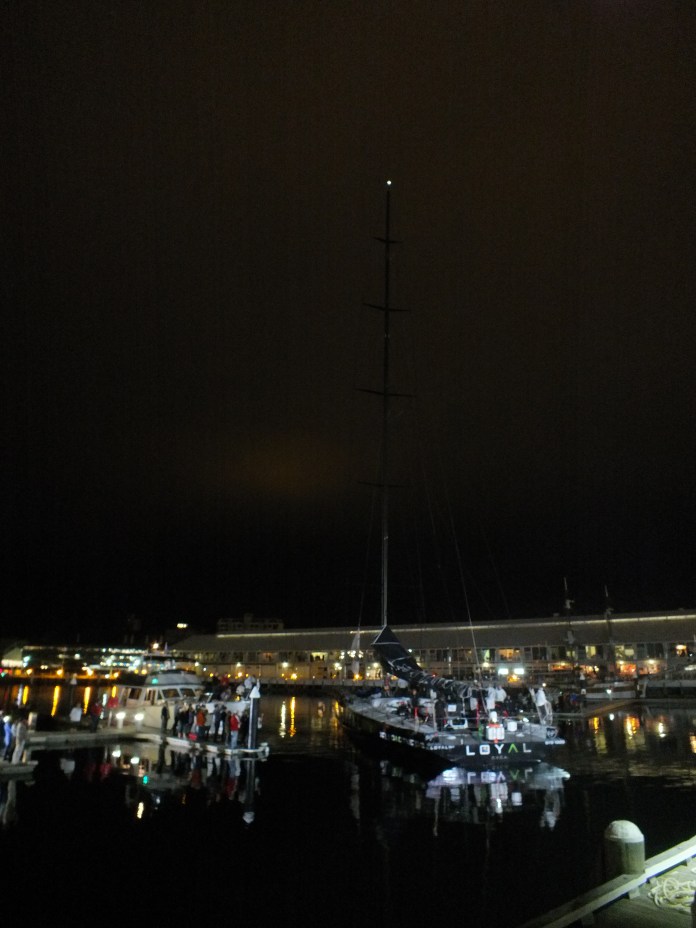
Superb winds meant cheering in the fastest yacht in the world at 3am, shortly before drenching the millionaire accountant skipper in champagne and rolex watches. The rest of the boats did their best not to go backwards.

dscf9052

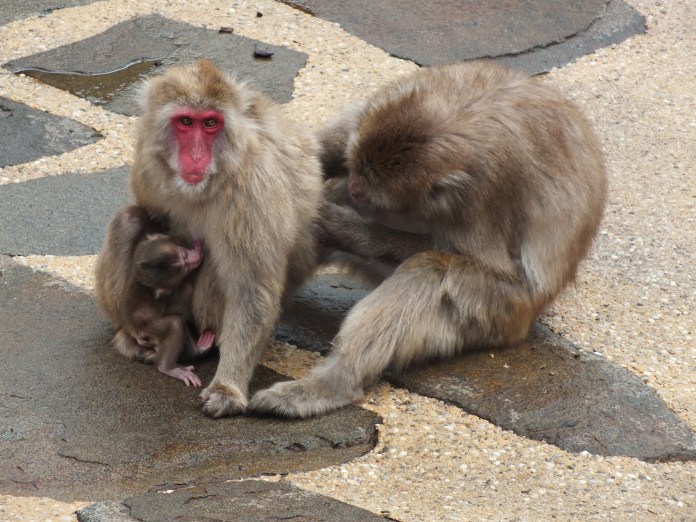
Launceston is a surreal city, with some beautiful, if melancholic, Japanese residents in the park.

dscf9142

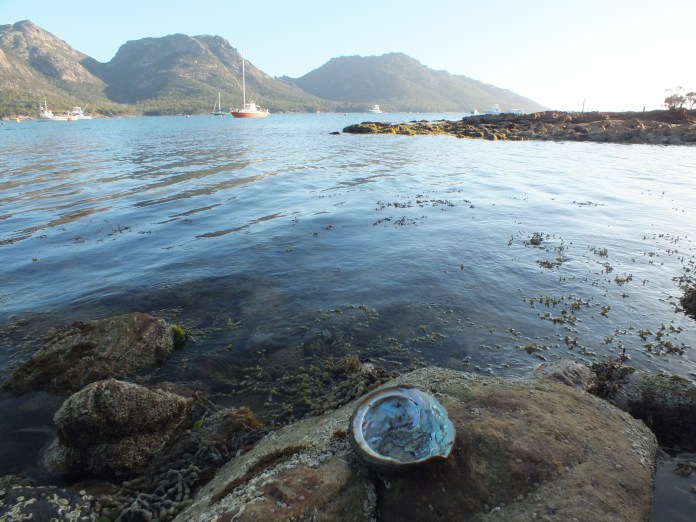
33km of Strahan beach. Nothing between us and South America. The purest air in the world. It’s enough to make you do cartwheels.
dscf9358

dscf9295

dscf9232

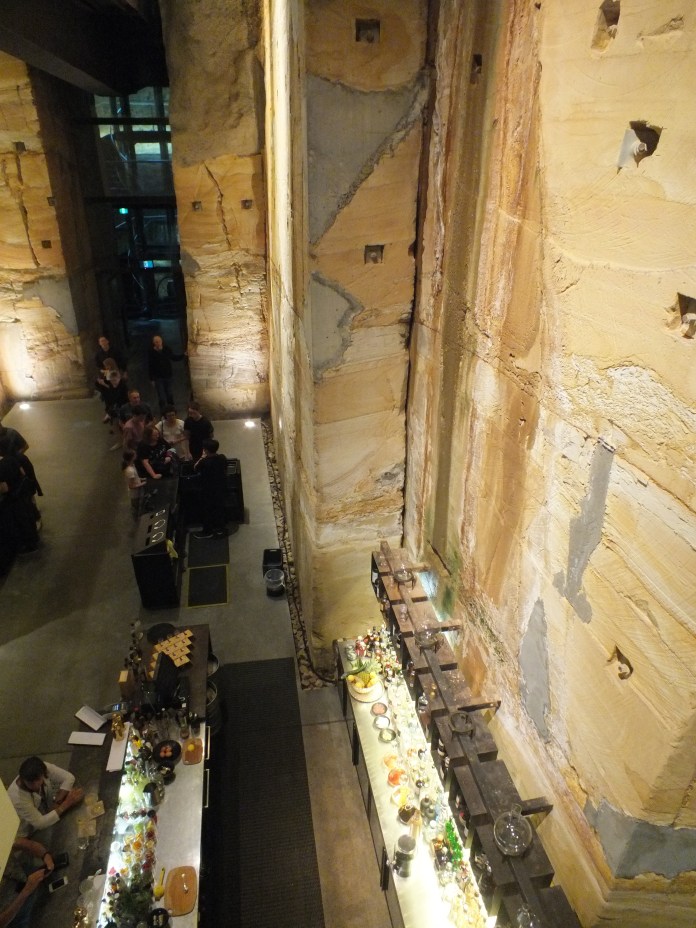
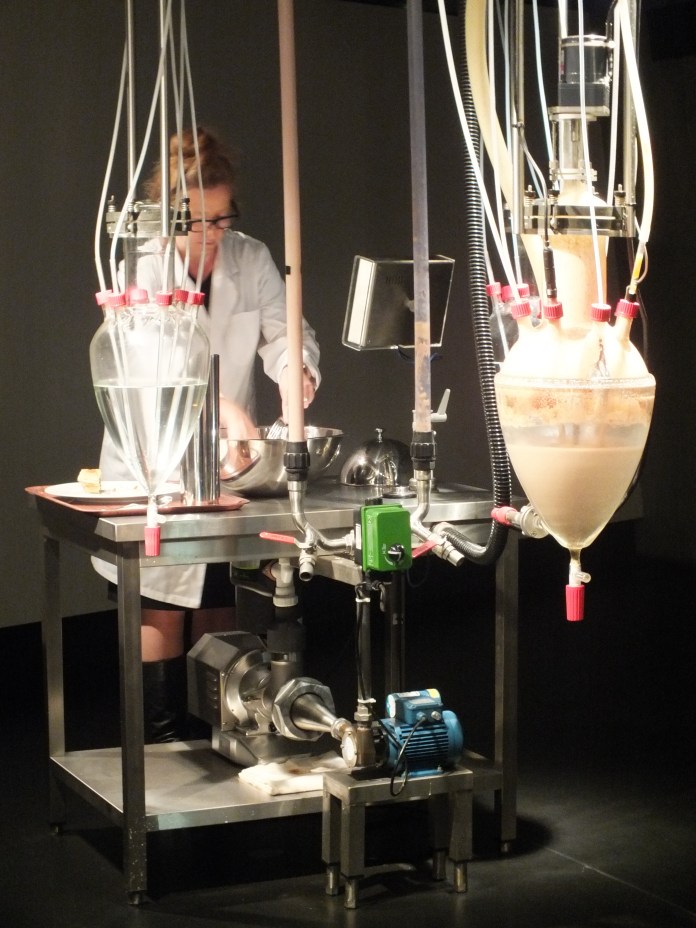
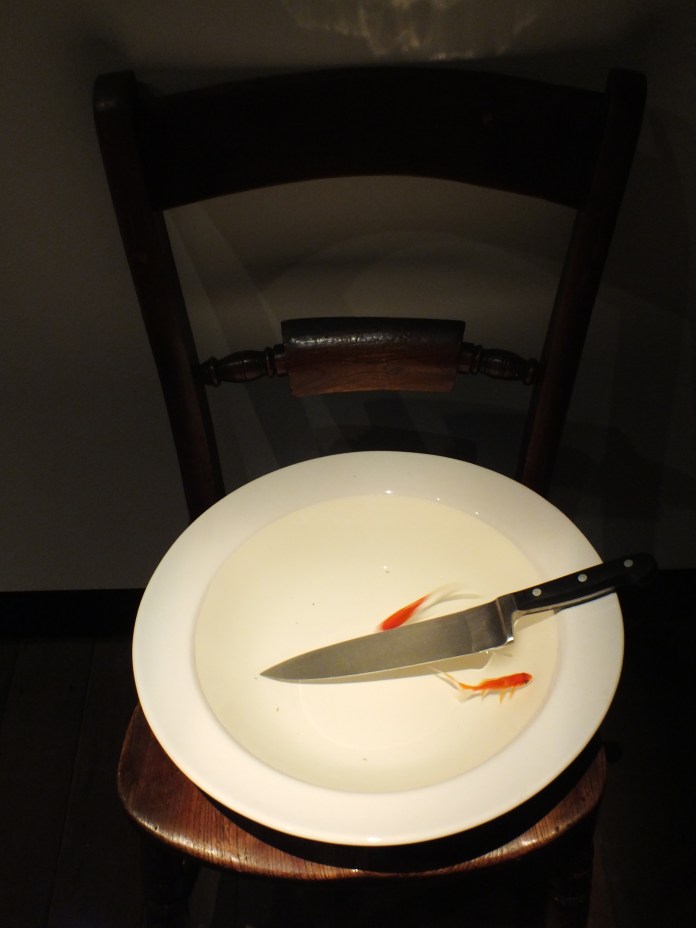
What would Christmas be without a trip to MONA, the Museum of Old and New Art, or temple of Atheism, Sex and Death?

dscf9464

dscf9457

dscf9445

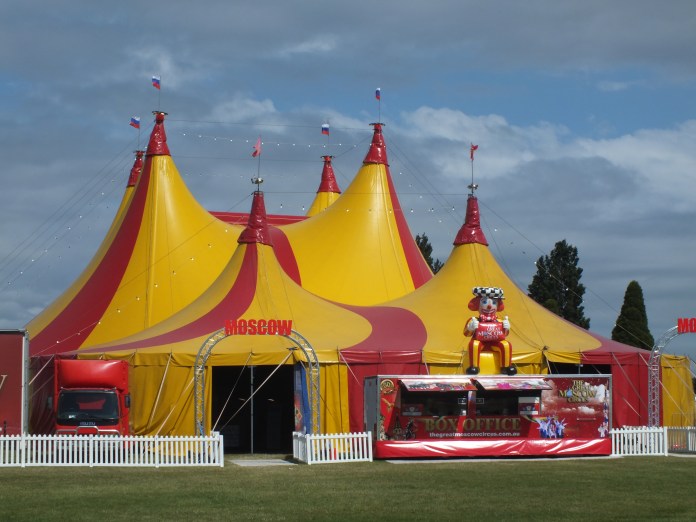
And Christmas wouldn’t be Christmas without a trip to the Great Moscow Circus of course!

dscf9491

And now I’m coming home.

dscf8824

Standard